Laser Cleaning Machines for Rust, Coating Removal and Surface Preparation
Product Overview
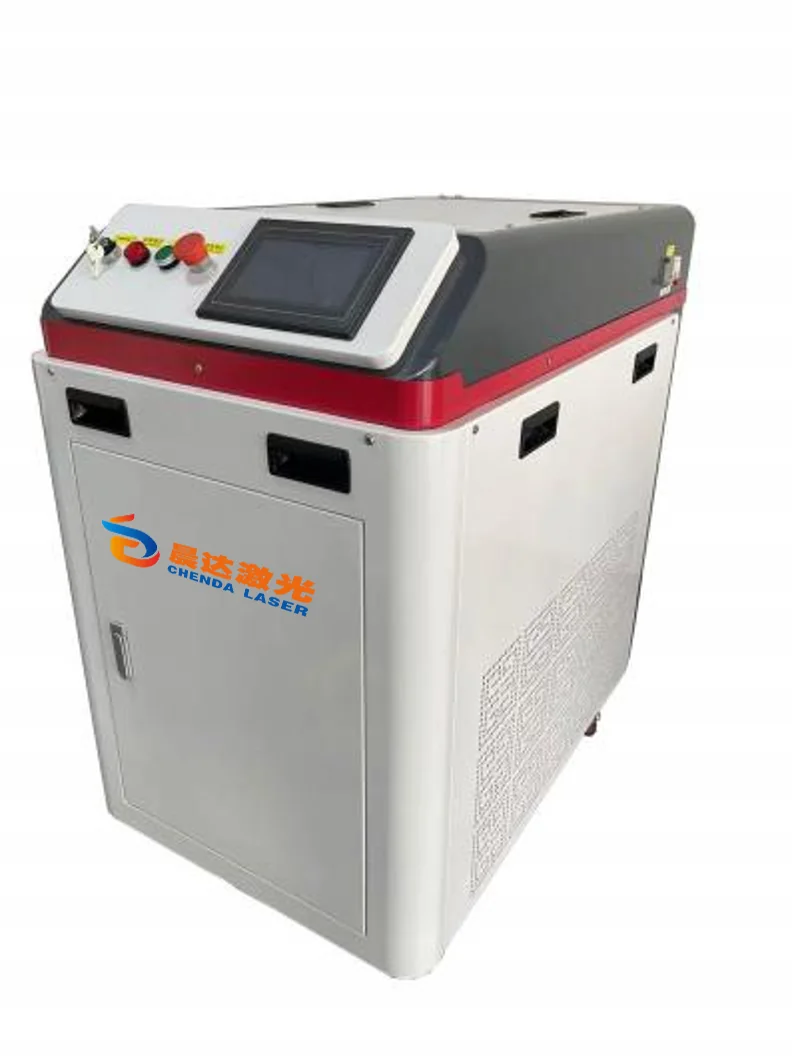
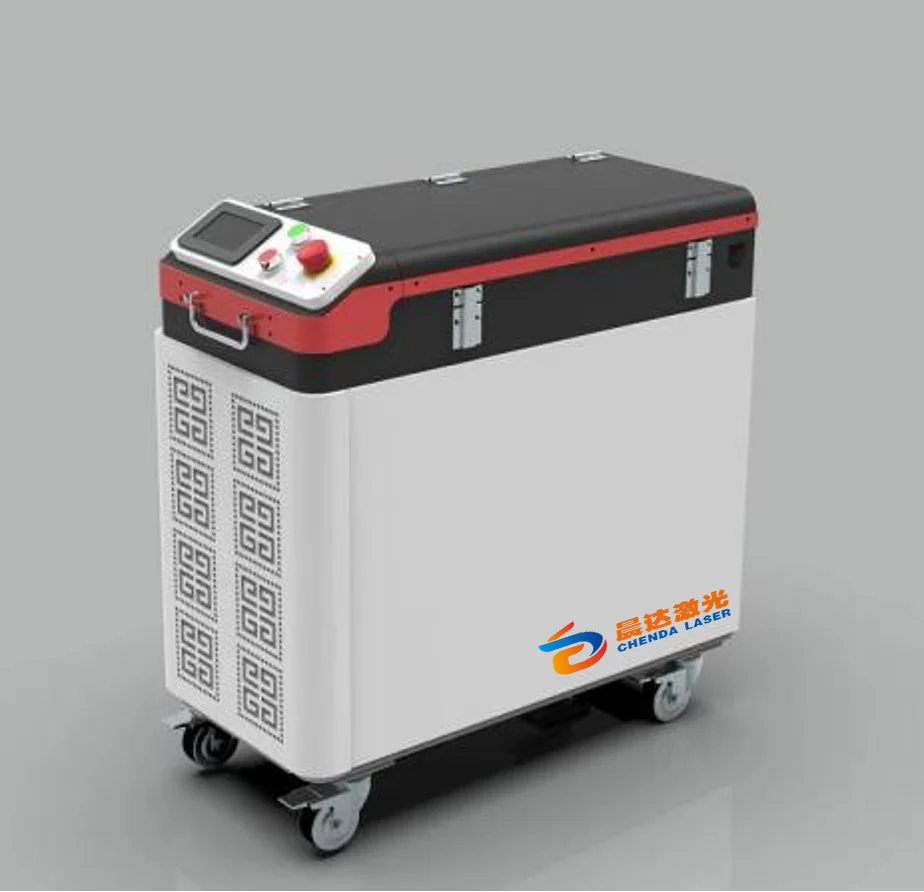
Remove rust from a repair zone, expose metal along a weld path or clean a functional surface without pressing a grinding tool against it. CHENDA laser cleaning equipment uses a scanned beam to treat a defined area, making it relevant where access, selective removal and the condition of the remaining surface matter as much as removal speed.
The right cleaning system balances removal rate, access and acceptable substrate change. Pulsed and continuous-wave processes have different heat-delivery characteristics; handheld access and automated motion solve different production problems. Select the process around the surface you need to deliver, not simply the highest wattage.
For a workshop cleaning several shapes each day, the practical benefit is moving the treatment head to the work instead of forcing every part through a fixed abrasive process. For a repeated production area, controlled motion can make the beam path and exposure more consistent. These are two different equipment priorities, and CHENDA’s configuration review starts by separating them.
Start by identifying both layers: the base material and what must be removed. Rust on a substantial steel plate, paint on a thin panel and release-agent residue on a shaped tool require different treatment settings. Coating chemistry, thickness, adhesion and the previous surface finish influence how much energy is needed and where the process should stop.
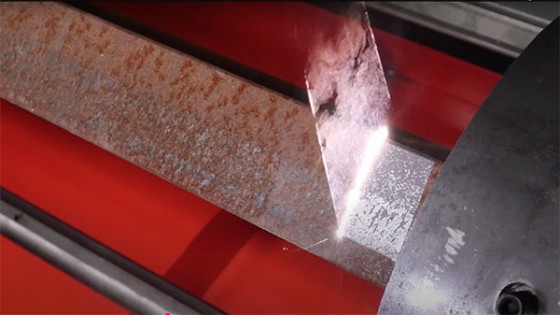
Removed rust and retained steel in the same workpiece · reference · P-Laser
Cleaning task
Useful outcome to define
Material condition to examine
Rust and oxide on steel
Required residual oxide and surface condition
Pitting depth, scale thickness and material remaining below corrosion
Local coating removal
Clean boundary around a repair or joining area
Coating layers, fumes and whether adjacent coating must be retained
Preparation around a weld
A consistent clean strip along the joint
Oil, oxide, access to corners and the next welding operation
Residue on tooling
Removal without changing functional surfaces
Texture, engraving, edges, coating and dimensional sensitivity
Cleaning before bonding
Surface suitable for the selected adhesive process
Residual contamination, roughness and time before bonding
Non-contact processing does not guarantee zero heat, zero discoloration or zero material removal. Aluminum, stainless steel, polished surfaces and thin sections deserve their own trials. Laser cleaning also cannot restore metal already lost to corrosion.
What should remain after laser cleaning?
Define the retained surface as carefully as the removed layer. On a repair plate, exposed sound metal may be the useful endpoint. On a mold, preserving a fine texture or engraved feature may be more important than making the surface uniformly bright. Before bonding, the endpoint is a surface that works with the selected adhesive and its preparation procedure. A single photograph cannot establish all three outcomes.
Inspect the exposed substrate as well as the removed layer · Laserax
Features & Engineering
Cleaning equipment reference
Match the laser mode to the surface
A pulsed laser delivers energy in short events. Pulse energy, pulse duration and repetition rate provide process controls beyond average power, which can be valuable when selective removal and limited heat accumulation are priorities. A continuous-wave laser delivers energy continuously and may be considered for robust substrates and larger removal areas. Neither mode is automatically suitable for every coating.
Average power describes energy delivered over time, while pulse energy describes an individual event. For equal pulses, average power equals pulse energy multiplied by pulse repetition rate. Two sources with the same average wattage can therefore interact differently with the surface. Pulse duration and focused spot size further change the intensity at the material. This explains why a nominal power comparison cannot establish the better cleaning process.
Confirm the source mode with the proposed configurationBeam exposure across a rusted steel surface · process reference · Laserax
Control the exposure across the scan
Scan width, pattern, speed, overlap and working distance determine how energy is distributed. A wider sweep covers more area but changes the energy delivered per unit area. Repeated passes over a corner can produce more heating than a steady traverse over a flat surface. Consistent motion and focus help avoid stripes, untreated islands and excessive local exposure.
A narrow line scan may follow a weld-preparation strip; an area pattern may suit a broader patch. Curved parts need attention to the changing working distance and angle across that patch. Pattern choice should keep exposure within the useful treatment area, particularly near an edge where the operator slows or changes direction. The available scan patterns and optics are selected with the head rather than assumed from the cabinet’s power label.
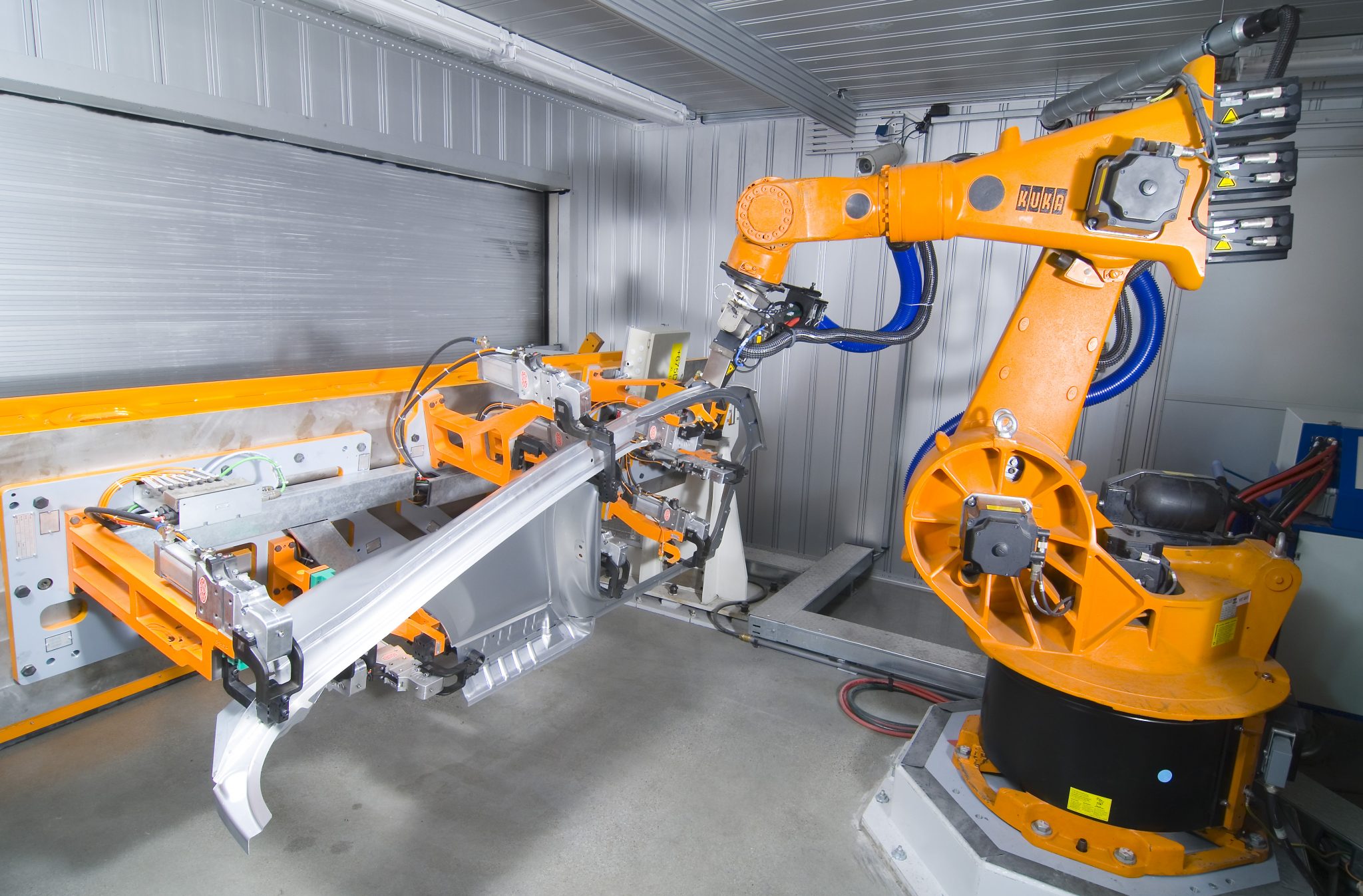
Handheld work favors access around irregular parts, with head weight, cable routing and operator reach affecting useful working time. Repeated seams or defined treatment windows may justify fixed motion or a robotic arrangement. The process still needs controlled access, suitable beam containment and extraction designed for the removed material.
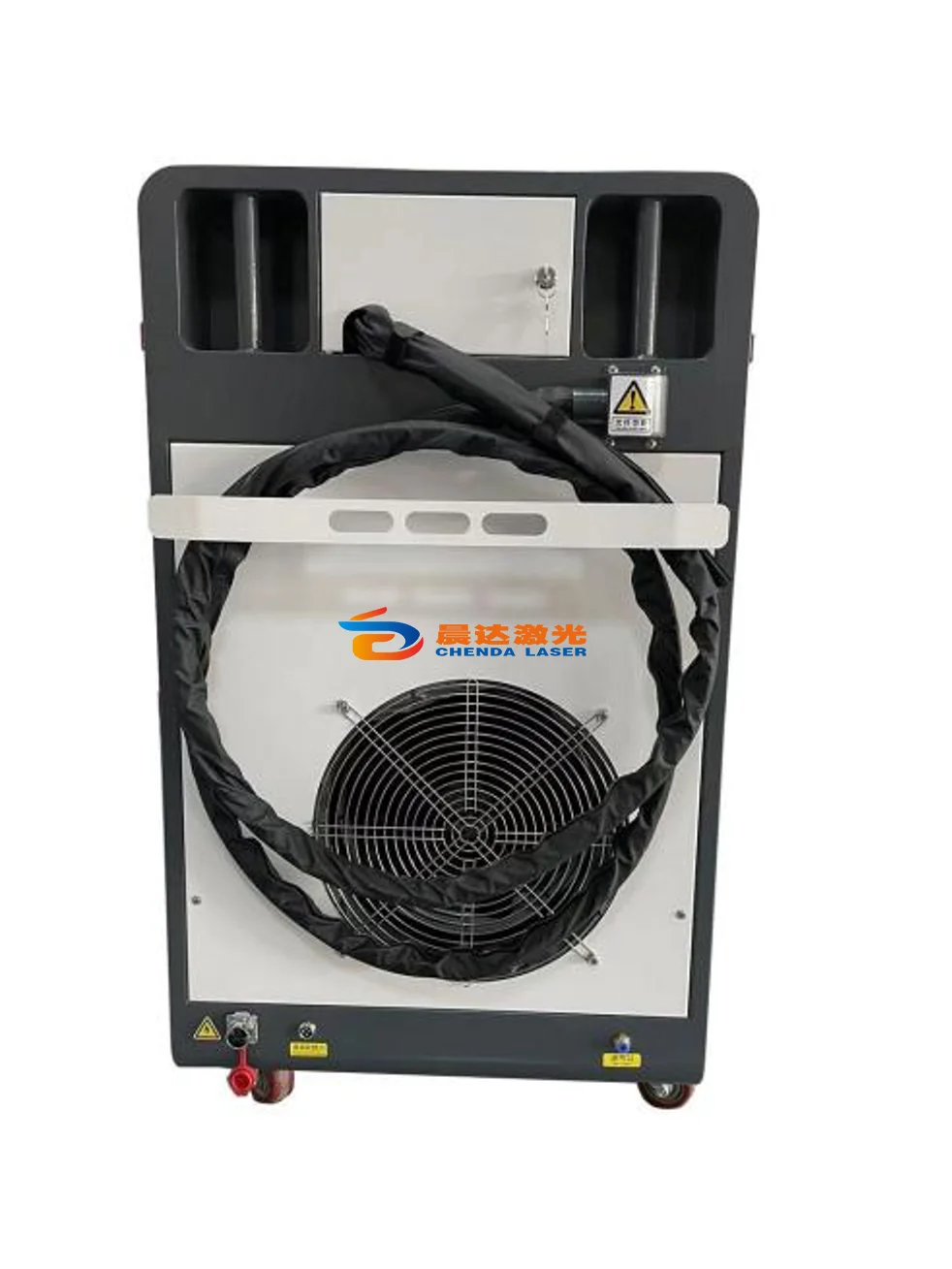
Head and cable storage arrangement
Protect the optical path and cooling performance
The cleaning head operates close to the material it removes. Deposits on a protective optical surface can change energy delivery, while a blocked cabinet inlet can restrict cooling. Accessible protective optics, a suitable air curtain where fitted, a secure head-storage position and serviceable inlet filters are therefore practical configuration details. They support repeatable operation and easier routine care; they do not make the system maintenance-free.
Technical Specifications
CHENDA’s cleaning catalog lists the following power selections. These are catalog reference points for configuration discussions, not a promise of cleaning speed, substrate compatibility or an identical package for every power level.
Cabinet configuration reference
Catalog selection
Published source power
Specification boundary
Handheld cleaning configurations
200, 300 or 500 W
Confirm source type, pulse data, head and cooling for the proposed configuration
Automated robotic cleaning configurations
200, 300 or 500 W
Robot, path, fixture and cell are specified for the application
Continuous-wave options
1,500, 2,000 or 3,000 W
Requires a separate heat-effect and removal-rate assessment
The catalog also lists a 10–100 mm scanning-width range for its illustrated lower-power configurations. Usable width and uniformity must be checked with the selected optics and working distance.
Application specification
Unit
What the proposal should establish
Average power / laser mode
W / pulsed or continuous
Match the removal task and allowable thermal effect
Pulse energy, duration and frequency, where applicable
mJ, ns, kHz
State the usable combinations rather than unrelated maximum values
Scan width and working distance
mm
Relate the usable field to the surface shape and focus tolerance
Treatment rate
m²/h or s/part
Measure using the actual coating, substrate, passes and finish requirement
Fiber length and head mass
m, kg
Check access, cable bend limits and handling
Cooling and electrical load
Method, kW, V, phase, Hz
Identify the complete package, including auxiliaries
Samples & Demonstration
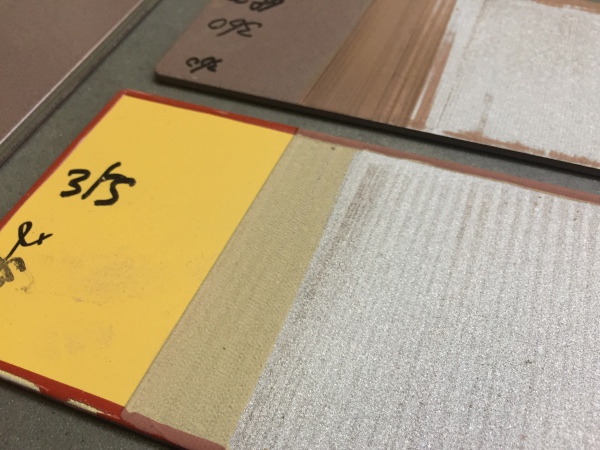
A useful comparison places the untreated area, treated area and protected reference surface side by side. Provide a sample with representative corrosion or coating, including an edge or recess if that feature is part of daily work. Identify any surface that must retain its original finish.
Request a trial record that shows the laser configuration, scan conditions, number of passes and treatment time. Evaluate residual coating, visible discoloration, roughness where relevant, and the function of the next operation. A brighter surface alone does not demonstrate acceptable preparation for bonding or painting. For dimensional tooling, inspect sensitive features as well as appearance.
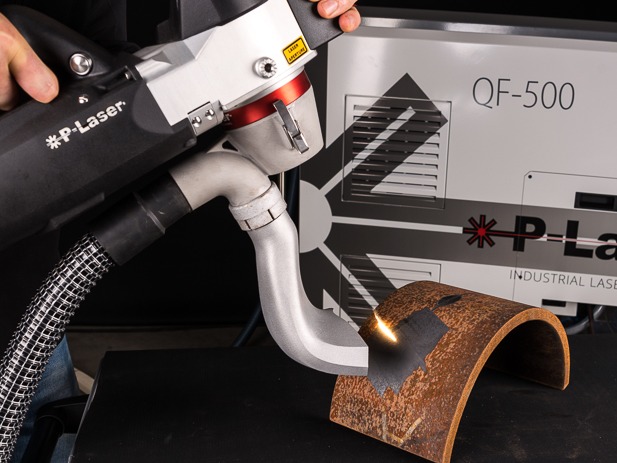
Actual removal on a curved steel sample · independent process reference · P-Laser
Observation during a trial
Process question it raises
Useful next comparison
Alternating clean and dark stripes
Is pass overlap or working distance changing?
Compare a controlled path with the same source settings
Clean center with residue at the edges
Is exposure uniform across the working field?
Inspect the field boundary and surface angle
Discoloration after removal
Is the exposed substrate receiving excessive further energy?
Compare a lower-exposure finishing pass and inspect substrate change
Residue returns on a nearby area
Is removed material being redeposited?
Review extraction position and the direction of treatment
These observations guide a controlled trial; each can have more than one cause. The useful outcome is a repeatable treatment window that cleans the surface without crossing the agreed damage limit.
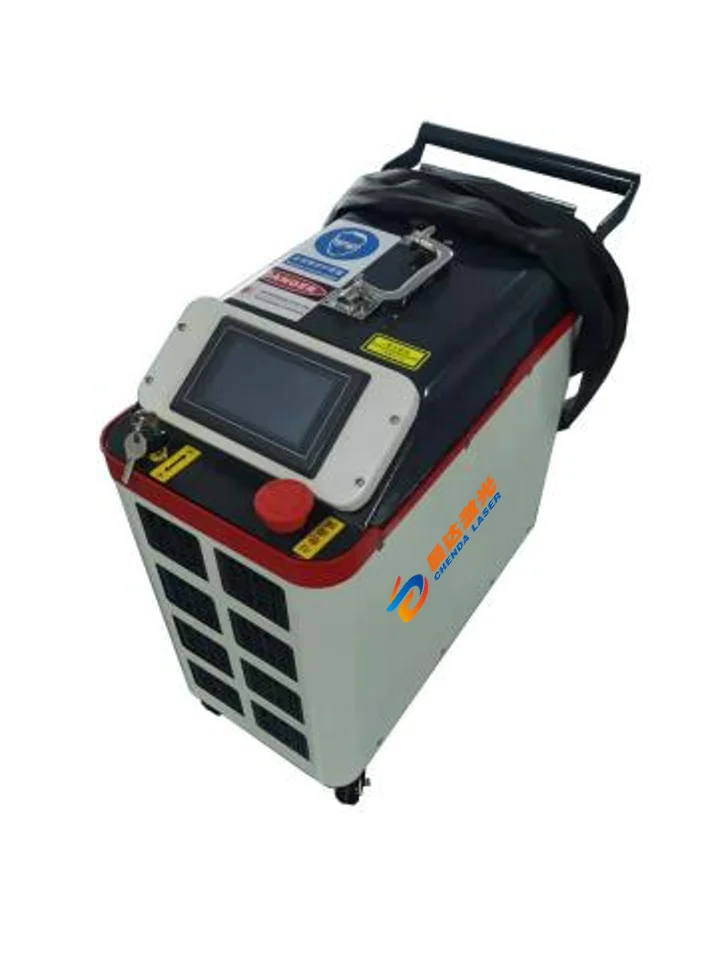
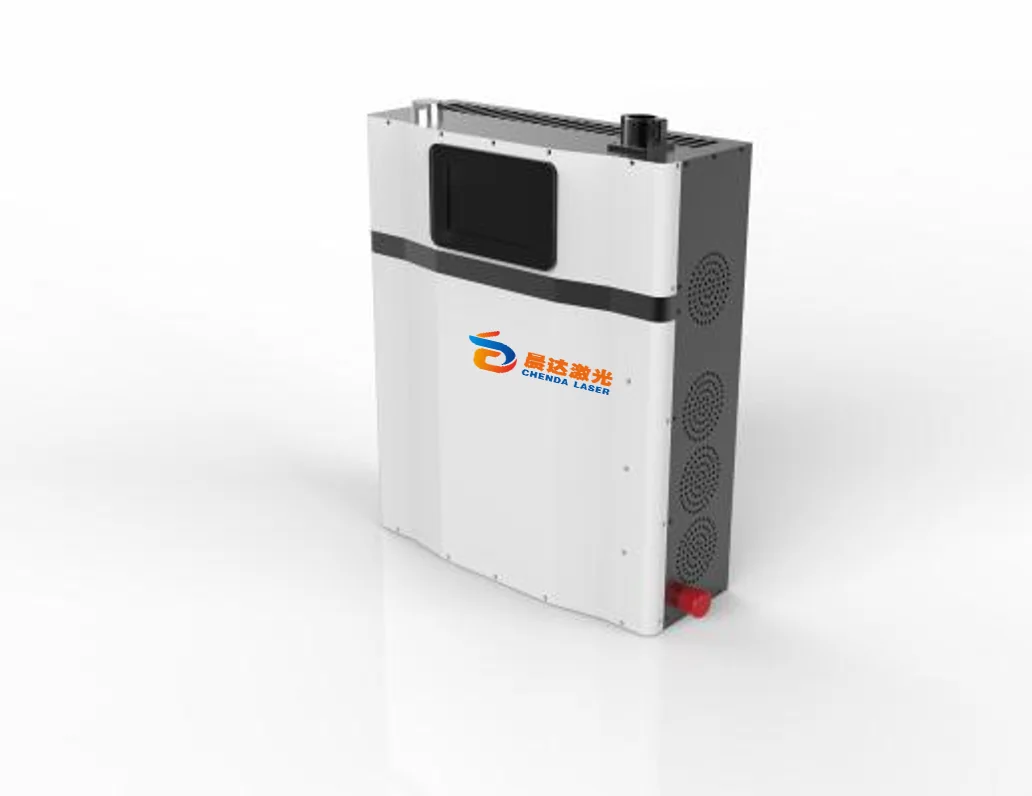
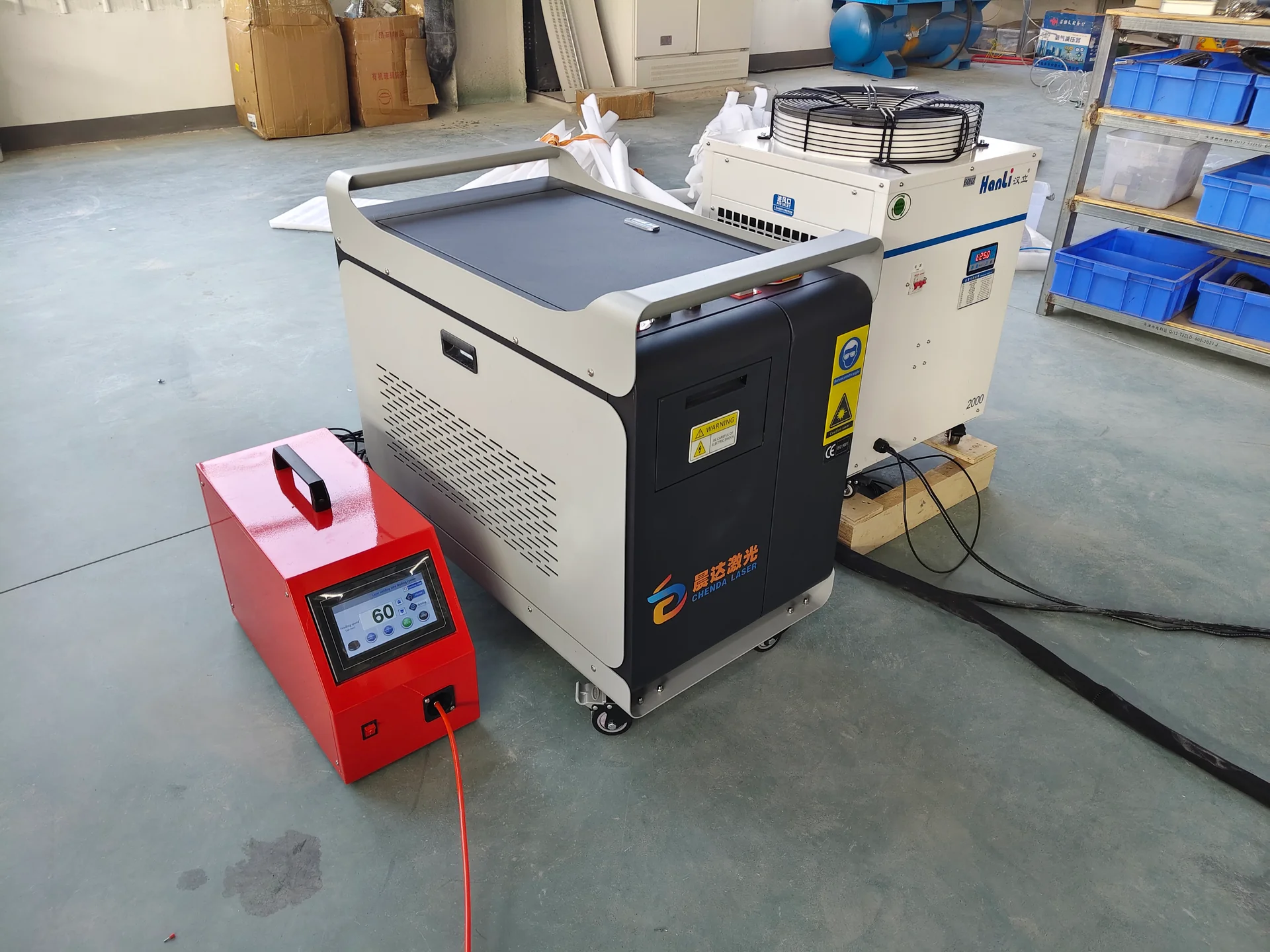
Discuss the source, scanning head, controller, cable length, cooling arrangement and mobility as one package. An air-cooled portable arrangement and a water-cooled cabinet have different utility and handling needs; cooling must match the selected source.
Application-dependent options can include dedicated extraction, interchangeable optics where supported, a fixture for repeatable stand-off, programmed motion, robotic integration or a local treatment enclosure. Confirm the applicable interlocks and operating controls for the actual installation. Extraction filters and protective optical components remain maintenance items even though the process does not consume blasting media.
For repair preparation, define the repair boundary, remove the target layer, inspect the exposed material and protect or process it before fresh contamination or corrosion occurs. For welding, coordinate the cleaned strip with the fixture and weld path so the joint is not contaminated again during handling.
02 / Repeated production
For repeated production, establish an acceptable treatment window on a representative part, retain a reference sample and control distance, scan overlap and part presentation. Changes in coating thickness can require a new setting even when the part number stays the same. Where the required result is a rounded edge or a directional brushed finish, evaluate mechanical finishing instead of treating cleaning as an equivalent operation.
03 / Surface priorities
Consider a painted steel bracket requiring a local welded repair. The process must expose the joint area while retaining sound coating elsewhere. That favors a defined treatment boundary, inspection of the newly exposed metal and a short, clean handoff into welding. By contrast, cleaning a textured tool places the emphasis on retaining the texture and accessing recesses. The same headline claim of “paint and residue removal” would hide the most important equipment difference between these jobs.
Site planning should address the cleaning position, reflected-beam paths, local extraction, cooling, electrical supply and room for safe cable movement. Portable equipment still needs a defined treatment area. Training should cover focus, scan selection, controlled trial progression, stop conditions and routine optical inspection.
Identify the source, head and cooling configuration when requesting service. This allows consumables and troubleshooting instructions to match the installed machine.
Plan cable movement and a defined treatment positionDefine the trial and record the treatment settings
Technical Resources
Request the proposed laser-mode datasheet, head and scan-field information, utility requirements, consumable list and cleaning-trial record. For automation, add the treatment envelope, fixture concept and cell layout. These documents should make clear which settings produced the agreed surface result.
Only while the process remains within the acceptable surface window. Additional power can increase heating or substrate change. Compare acceptable treated area per hour after inspection, not the speed of the moving spot.
Coated and laser-cleaned regions on test panels · P-Laser
Can a laser remove paint without removing the layer beneath it?
Selective removal may be possible, but it depends on the interaction of the layers with the laser. Provide the actual coated material and define whether primer, plating or the substrate finish must remain.
It can remove suitable corrosion products, but existing pits remain. If the part requires dimensional restoration or a specified smooth finish, cleaning is only one stage of the repair route.
Is a handheld machine appropriate for repetitive work?
It may be, especially where access varies. When the same area must be treated repeatedly, compare operator consistency and exposure time with a guided or automated process.
Not reliably when coating, corrosion or surface condition changes. Use an approved reference condition and define when a sample check or parameter adjustment is required.
Send photographs of the whole part and the surface detail, substrate grade, layer description and thickness if known, area per part, required output and the next manufacturing operation. Include the surface changes you cannot accept and whether the part can be brought to a fixed station. CHENDA can use this information to discuss a cleaning configuration and a meaningful trial.