Workshop utilities / Compressed air

Air Compressors and Compressed-Air Systems for Manufacturing

PressureFlowAir quality
Skid-mounted air system showing a dryer and filter bank
Compressor, receiver and treatment arrangement · system reference

Product Overview

Keep production supplied with the pressure, flow and air quality it actually uses. CHENDA compressed-air equipment selection connects workshop pneumatics, machine auxiliaries and suitable laser-cutting applications with an appropriately sized compressor and treatment package. Compact integrated arrangements and separately arranged storage and treatment solve different installation and service needs.

The right system maintains its required output at the point of use during real operating demand. A motor-power rating alone cannot show this. Pressure losses, simultaneous machine use, inlet conditions and air treatment all influence how much usable air reaches the equipment.

For a workshop, reliable air means clamps completing their cycles, tools operating consistently and the approved cutting process receiving its required supply while other equipment is running. The compressor, dryer, filters and pipework all contribute to that outcome. Selecting them together helps avoid buying a larger compressor to compensate for a restriction elsewhere in the system.

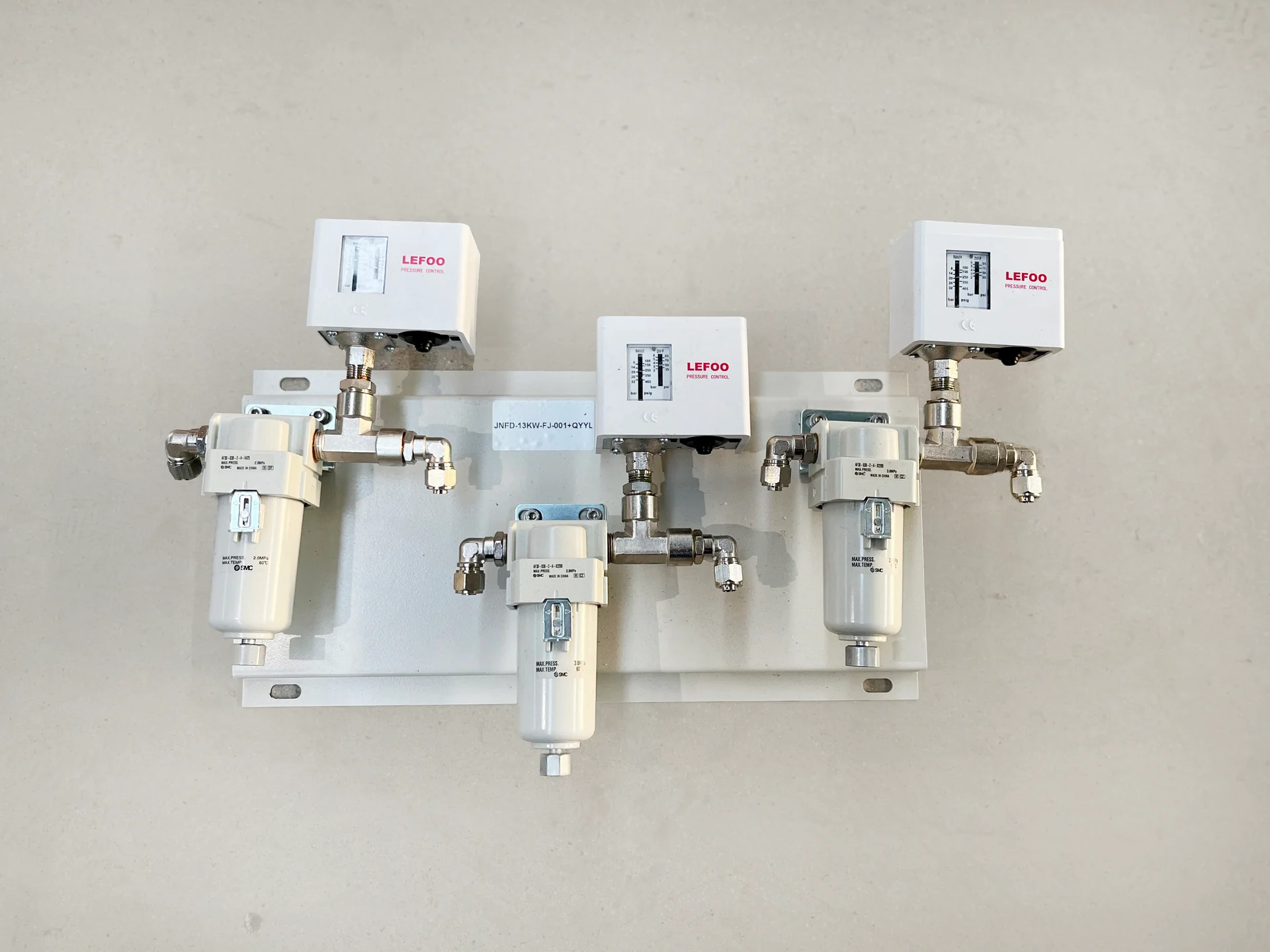
Gas-line assembly with LEFOO pressure switches and SMC filter units
Pressure and treatment requirements extend to the machine connection

Materials & Capabilities

For compressed air, the starting point is the connected process and its operating conditions. Record each consumer’s required pressure, flow, duty pattern and air-quality limit. Separate continuous demand from intermittent bursts and identify equipment that may run at the same time.

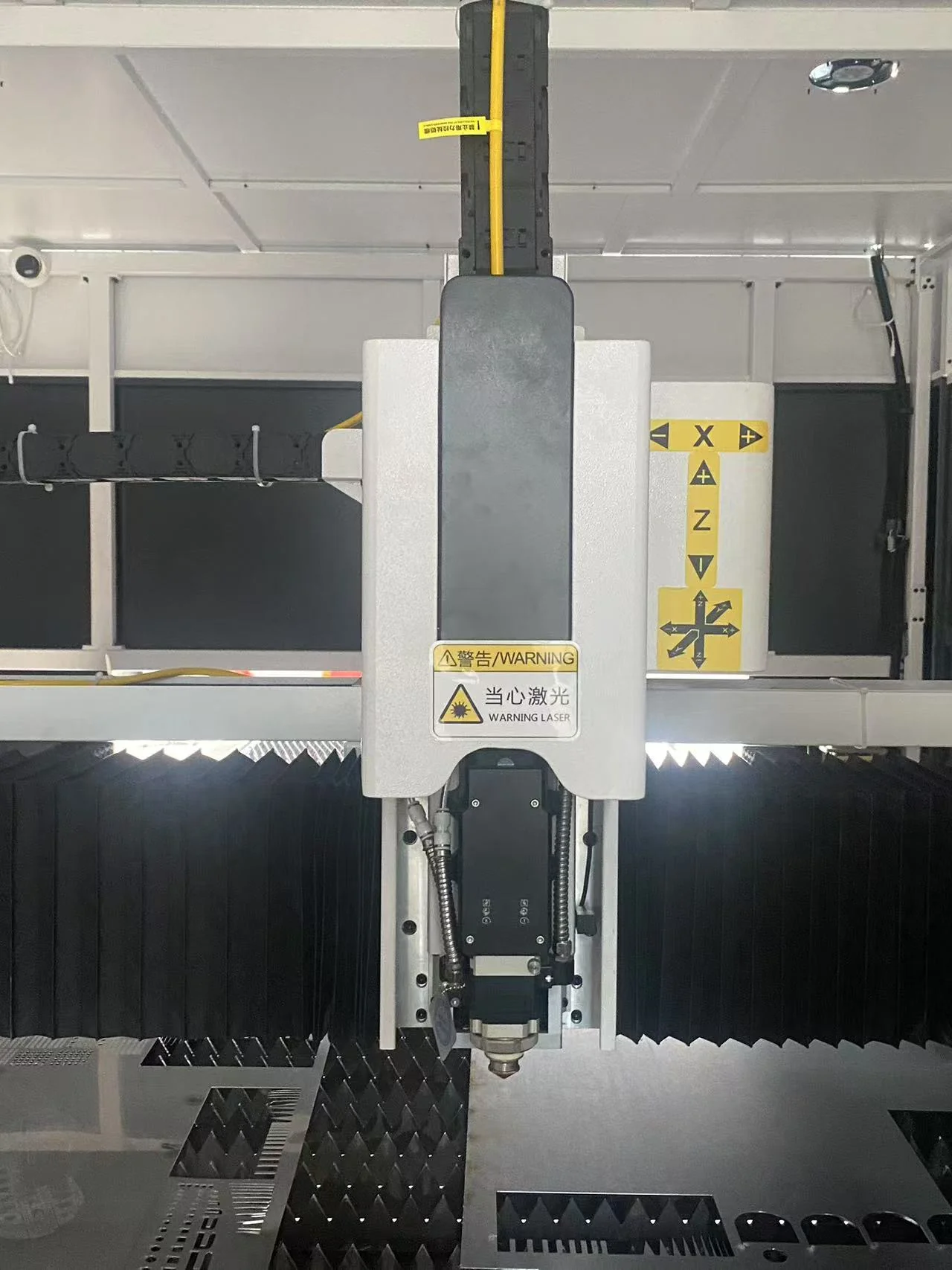
Installed laser cutting head above a metal sheet and slatted cutting table
A cutting head is one point of use in the production system
Air use Operating requirement Selection concern
Machine pneumatics and clamping Stable pressure during repeated actuation Peak demand, local regulation and leaks
Approved compressed-air laser cutting Pressure and flow at the cutting system’s specified connection Continuous cutting demand, dryness, oil control and accepted edge quality
Pneumatic tools on a digital cutter Supply matched to the selected tool Intermittent demand and manufacturer air specification
General workshop tools Sufficient flow during simultaneous operation Demand diversity, hose losses and distribution layout
Feed air for a separately specified gas generator Input conditions required by that generator Feed-air demand differs from delivered gas volume and purity

Compressed air used for actuators is not automatically suitable as laser assist gas. The cutting machine and process must approve air cutting for the material and thickness. Air also does not replace inert shielding gas in a welding process that requires it.

Features & Engineering

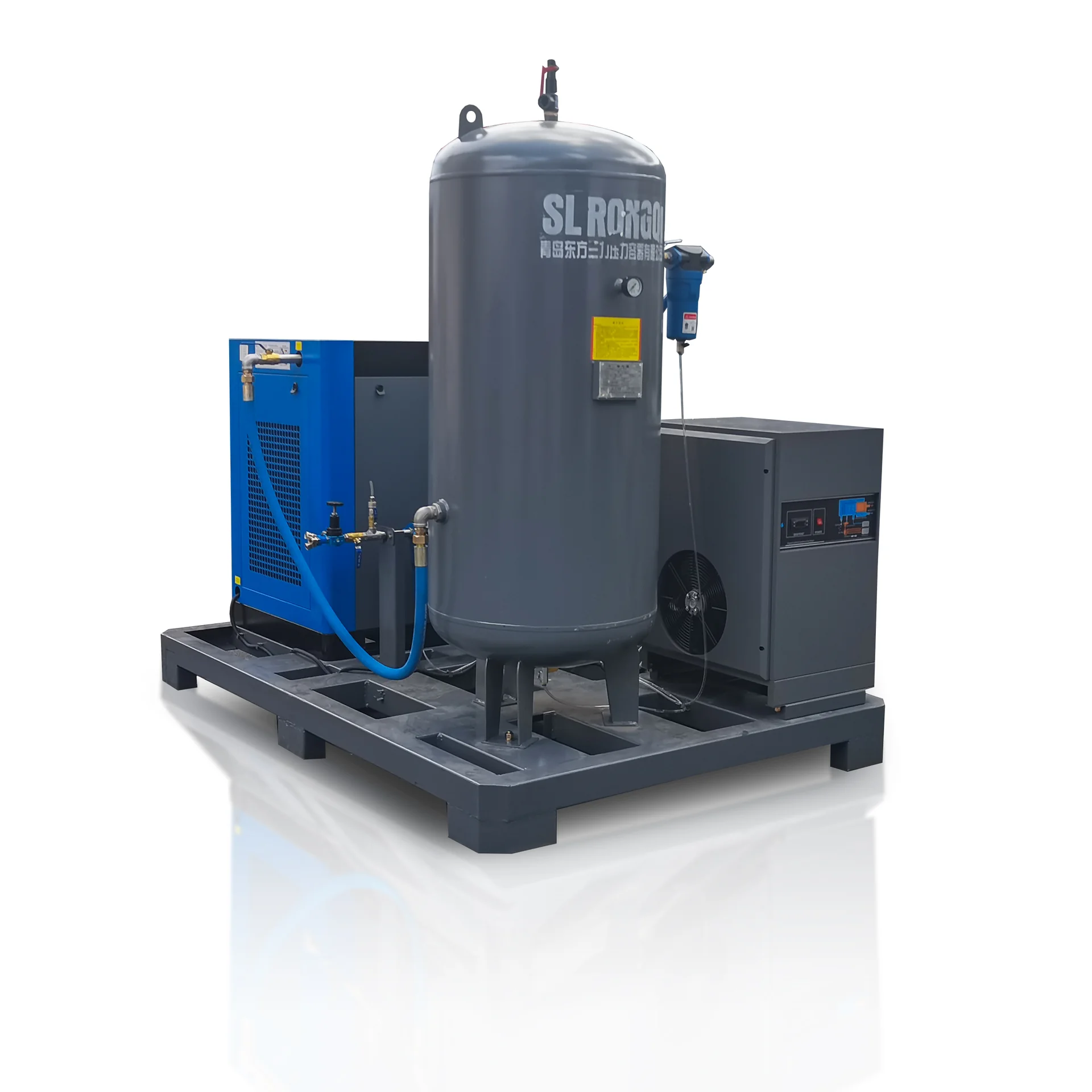
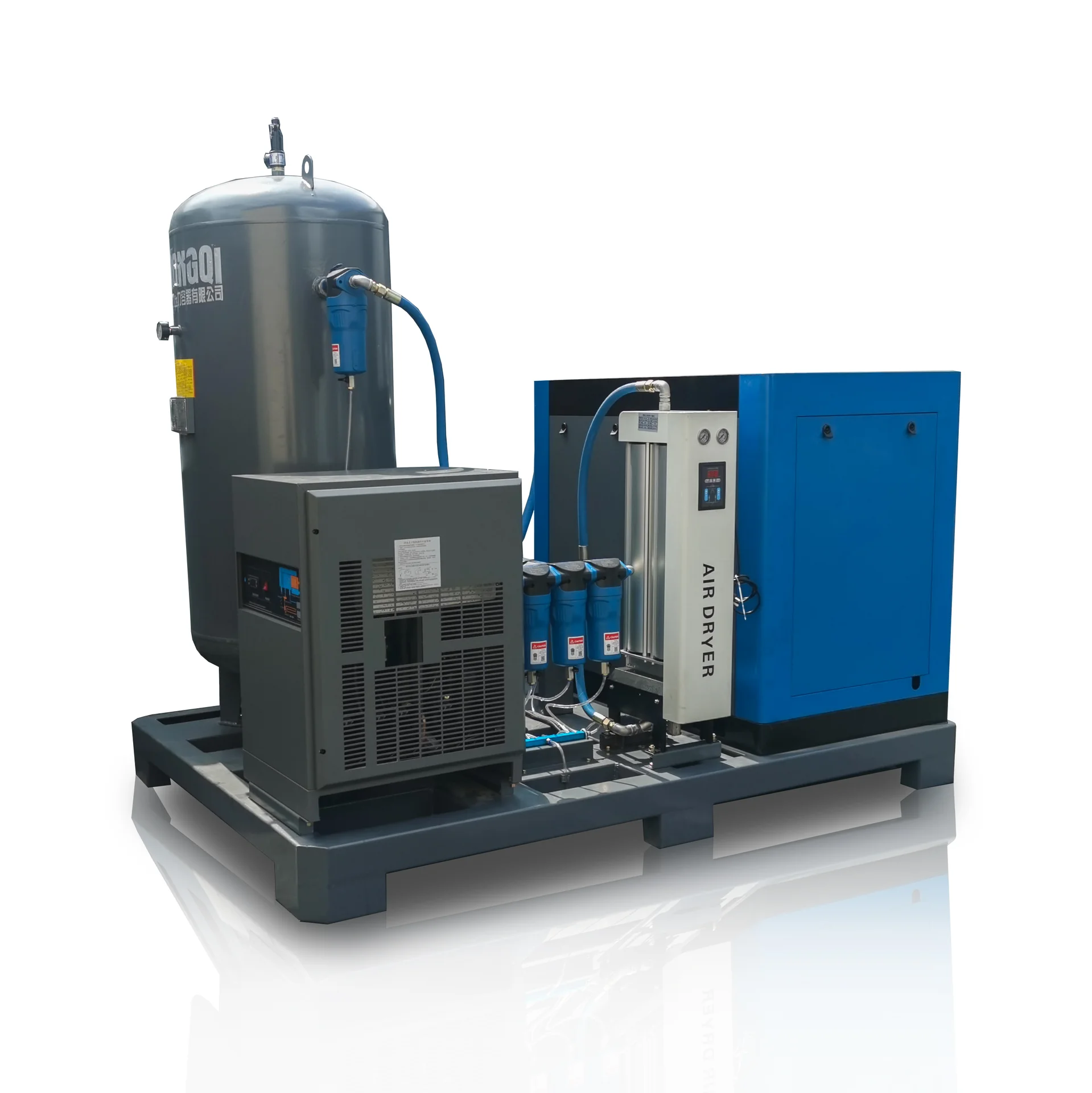
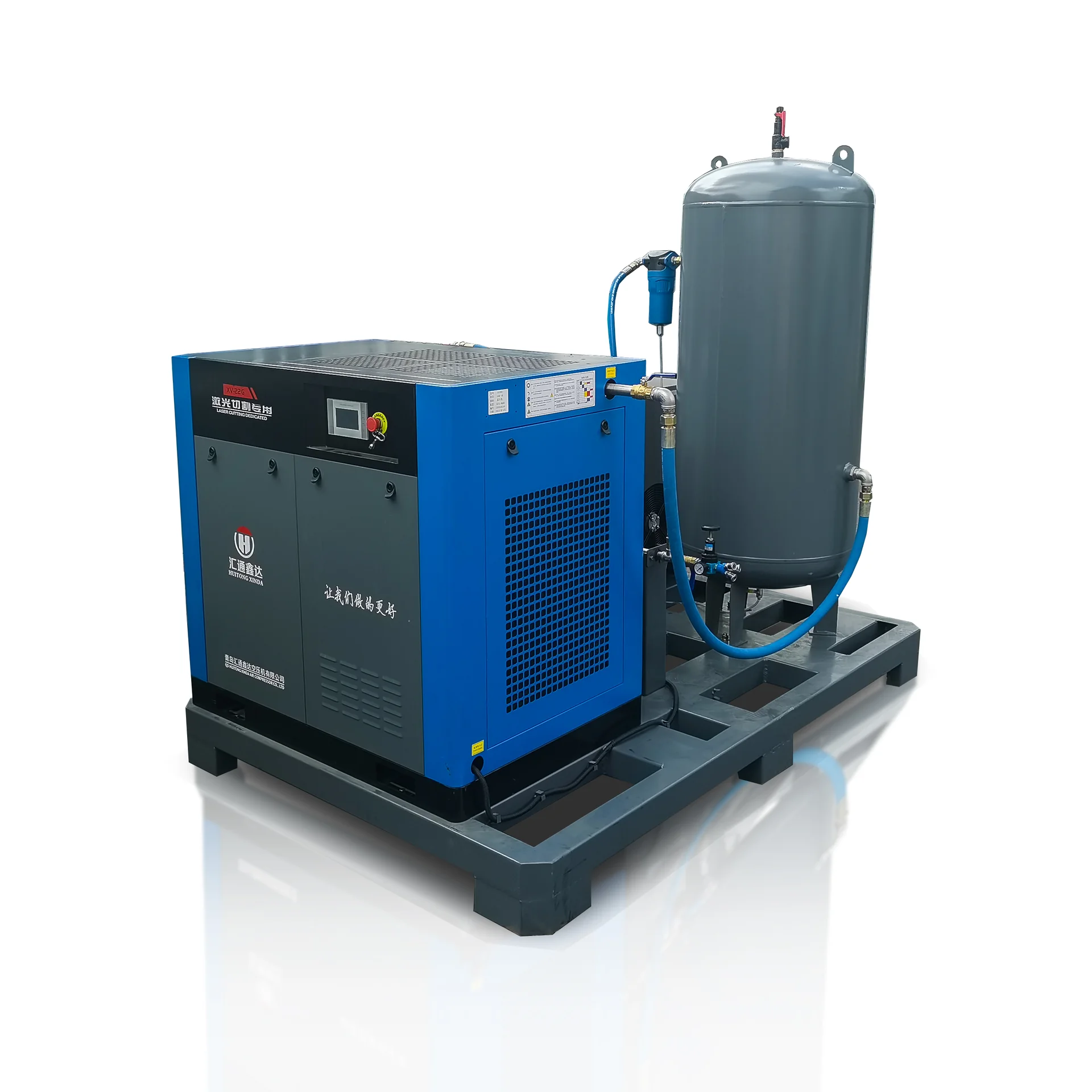
Skid-mounted air compressor with a vertical air receiver
Generation and storage · arrangement reference

Match compressor control to the demand pattern

A fixed-speed rotary screw arrangement can be appropriate for a steady production load when correctly sized and controlled. A variable-speed arrangement can adjust output within its operating range as demand changes. The better choice depends on the measured load pattern, minimum flow and operating hours; variable speed is not an automatic energy-saving guarantee at every load.

In a multiple-compressor system, one machine may carry a relatively steady base load while another responds to changes. Poorly coordinated pressure settings can make machines compete, unload unnecessarily or operate inefficiently. The control strategy should therefore reflect how the equipment works together, including periods when production slows. Installing a variable-speed machine without reviewing the other controls can leave this problem unresolved.
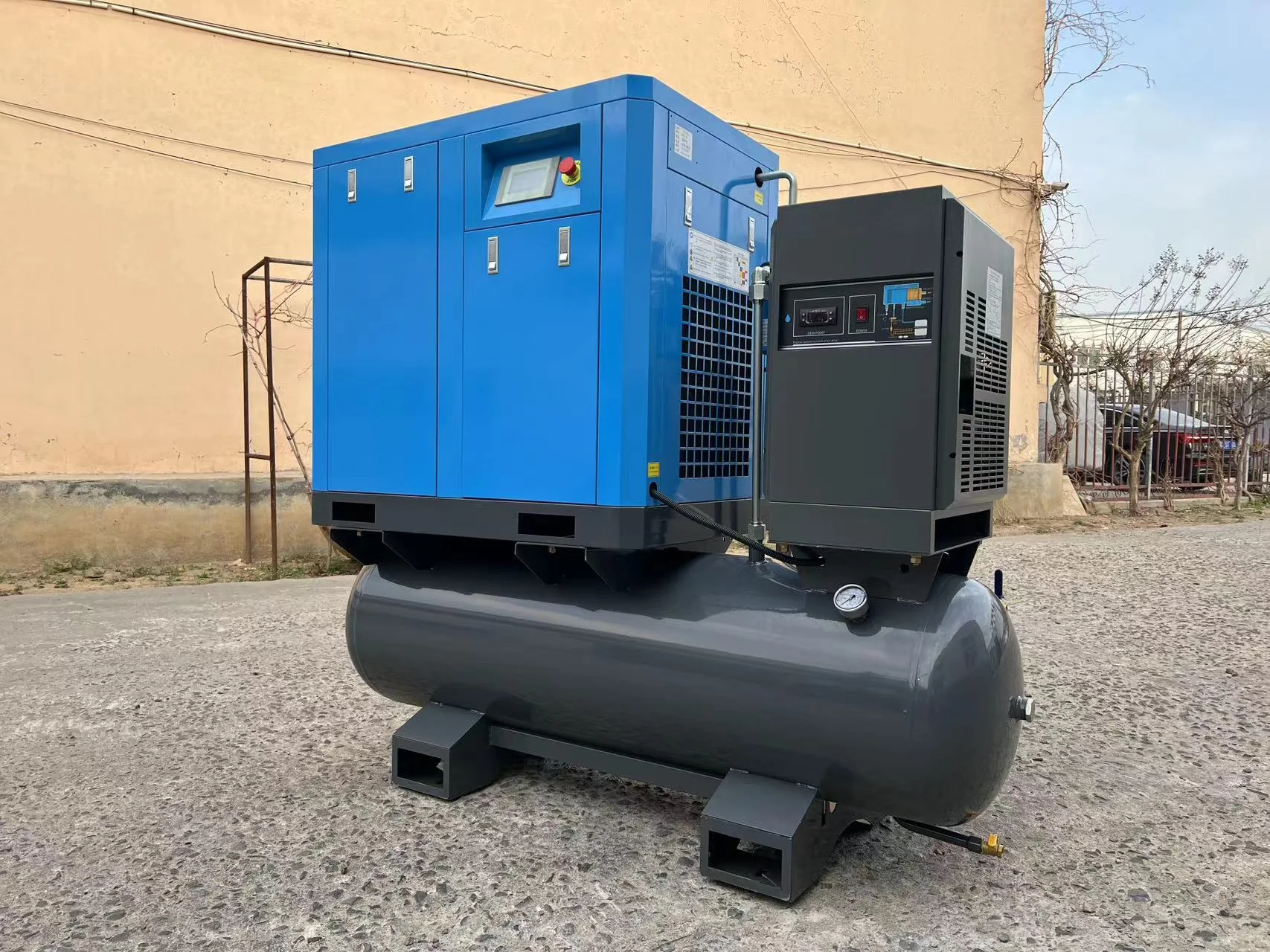
Blue tank-mounted air compressor and separate dryer cabinet outdoors
Match the proposed compressor control to measured demand
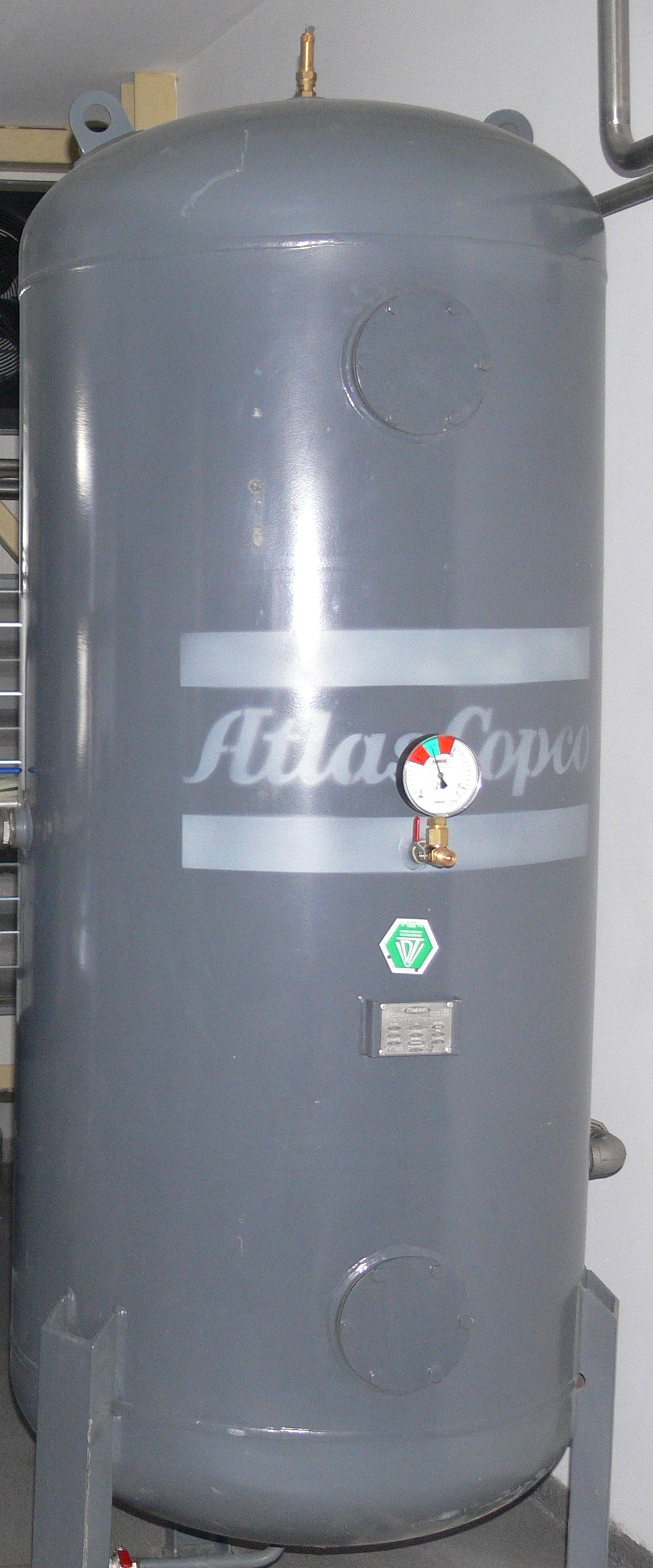
Vertical compressed-air receiver tank with a pressure gauge
Separate receiver · industrial storage reference · Kdarek561 · Public domain (author dedication worldwide)

Use storage to handle changing demand

A receiver provides a buffer between air production and consumption. It can help manage short demand peaks and the compressor’s control cycle, but it cannot compensate indefinitely for insufficient compressor capacity. Receiver sizing should consider the usable pressure band and the duration of the demand event.

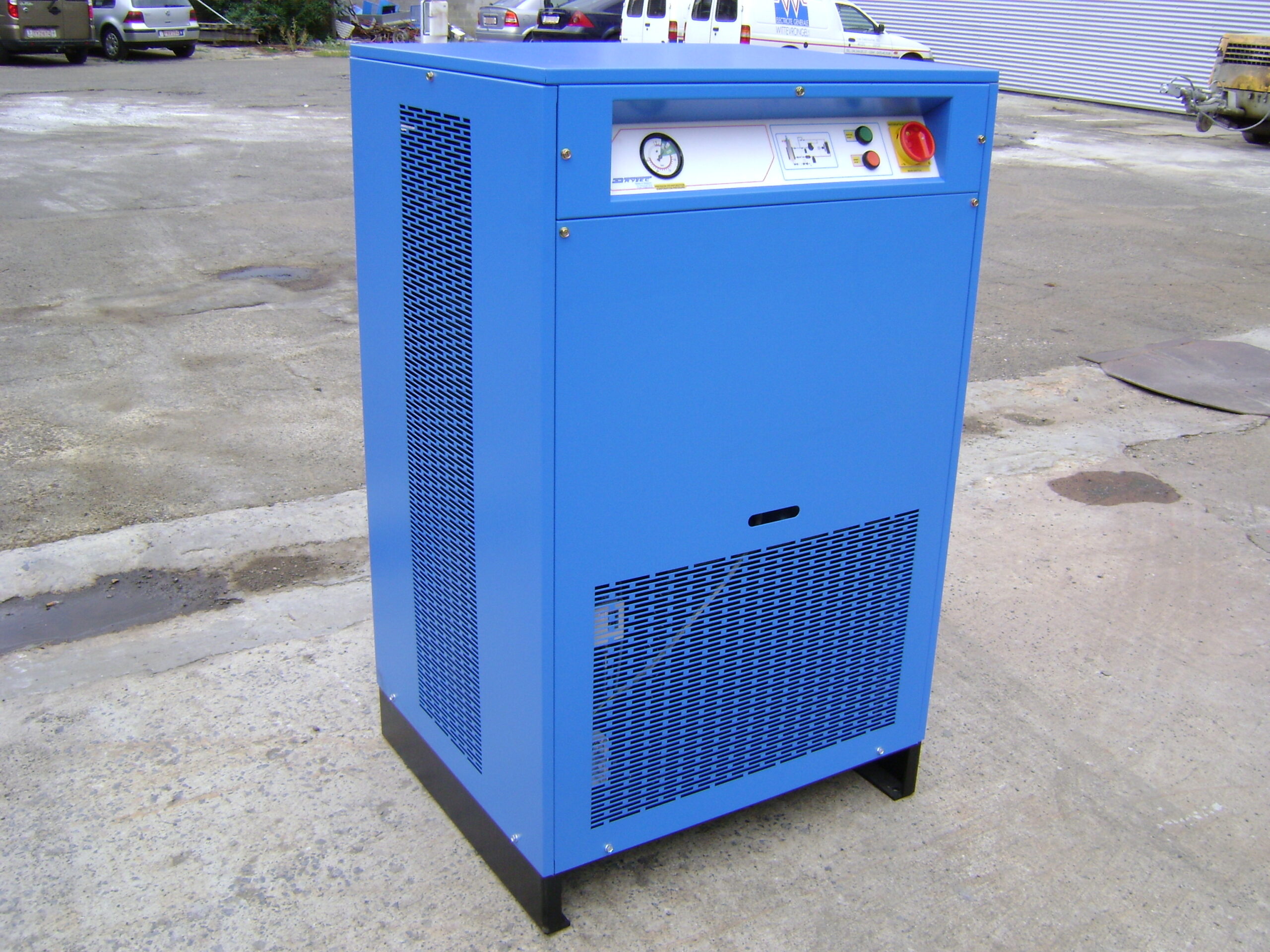
Blue refrigerated compressed-air dryer photographed outdoors
Refrigerated drying · equipment reference · Berpi · Public domain (author dedication worldwide)
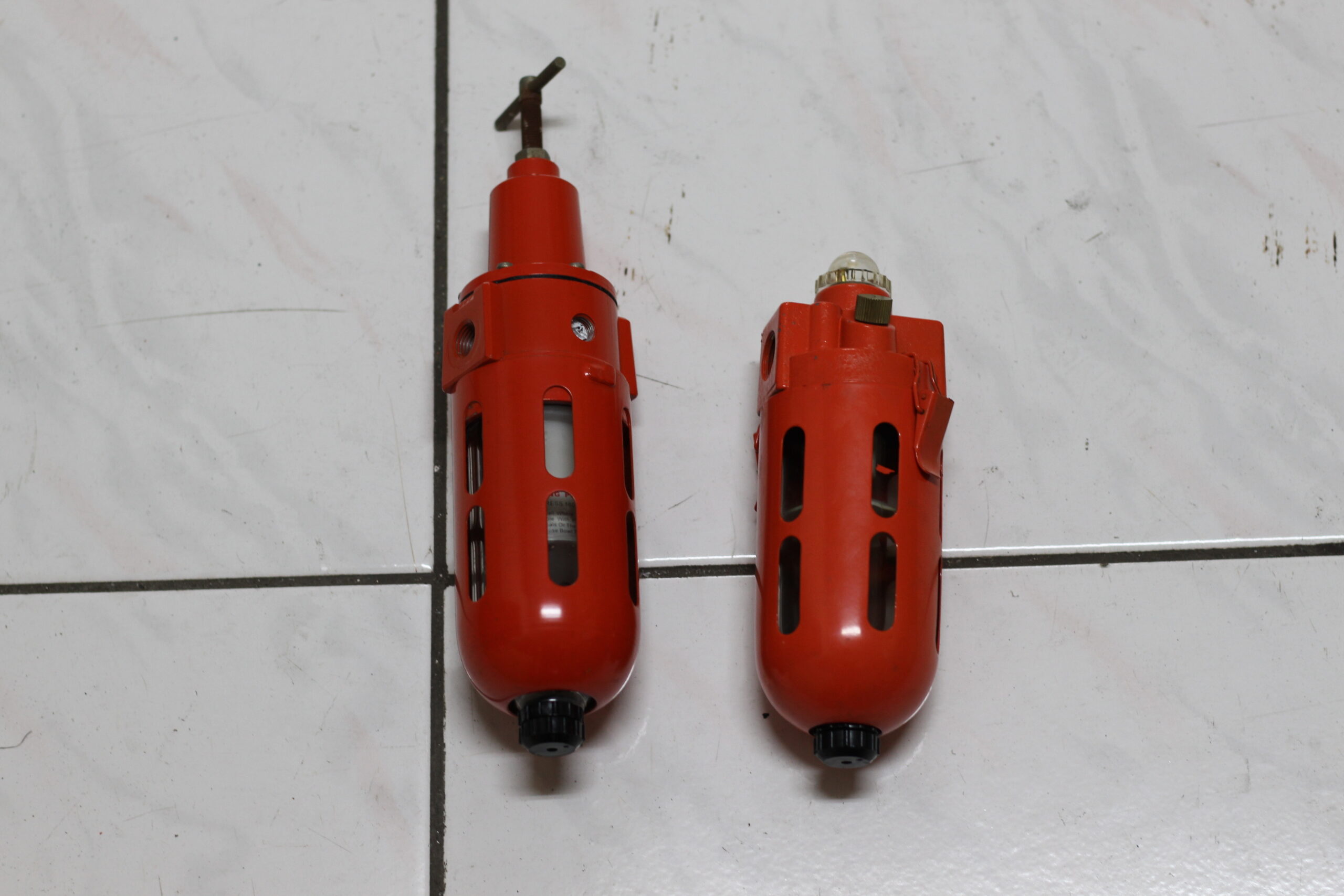
Two red compressed-air filter and pressure-regulator components
Local air treatment · component reference · Honmingjun · CC BY-SA 4.0

Deliver the required air quality

Drying controls moisture; filtration addresses specified contaminants. A particulate or coalescing filter does not replace a dryer, and an oil-free compression stage does not remove ambient moisture. Select the treatment train from the downstream requirement and account for its flow capacity and pressure drop. Drain performance and filter condition directly affect the delivered result.

Follow the air from compression to the machine

Compression heats the air. As the air cools, part of its water content can condense, creating a separation and drainage task before the remaining vapor is addressed by the dryer. A typical arrangement can therefore involve aftercooling, bulk-liquid separation, storage, drying and filtration, but their exact order and ratings depend on the selected treatment system. A flow diagram is more useful than an unlabeled list of accessories.

Storage before the dryer and storage after the dryer have different effects. Upstream storage can help buffer generation and collect liquid when properly drained, while downstream dry-air storage can support a short demand peak without drawing its full instantaneous flow through the dryer. The choice affects dryer loading, control response and layout. It should be designed as part of the package, not inferred from where a tank appears in a photograph.

Skid-mounted air system showing a dryer and filter bank
Verify each treatment stage and its connections with the supplied layout
Two red compressed-air filter and pressure-regulator components
Examine pressure while air is flowing through the connection · Honmingjun · CC BY-SA 4.0

Find pressure loss where it occurs

Pressure at the compressor and pressure at the machine can differ substantially during use. A restrictive filter, undersized line, narrow coupling or long hose can become the limiting point. Comparing pressures simultaneously before and after the suspected restriction helps locate the problem. A no-flow pressure reading can hide it because much of the loss occurs while air is moving.

Technical Specifications

The proposed model should be compared at a stated discharge pressure and rating basis. Request delivered flow at that pressure, not only swept volume or motor size.

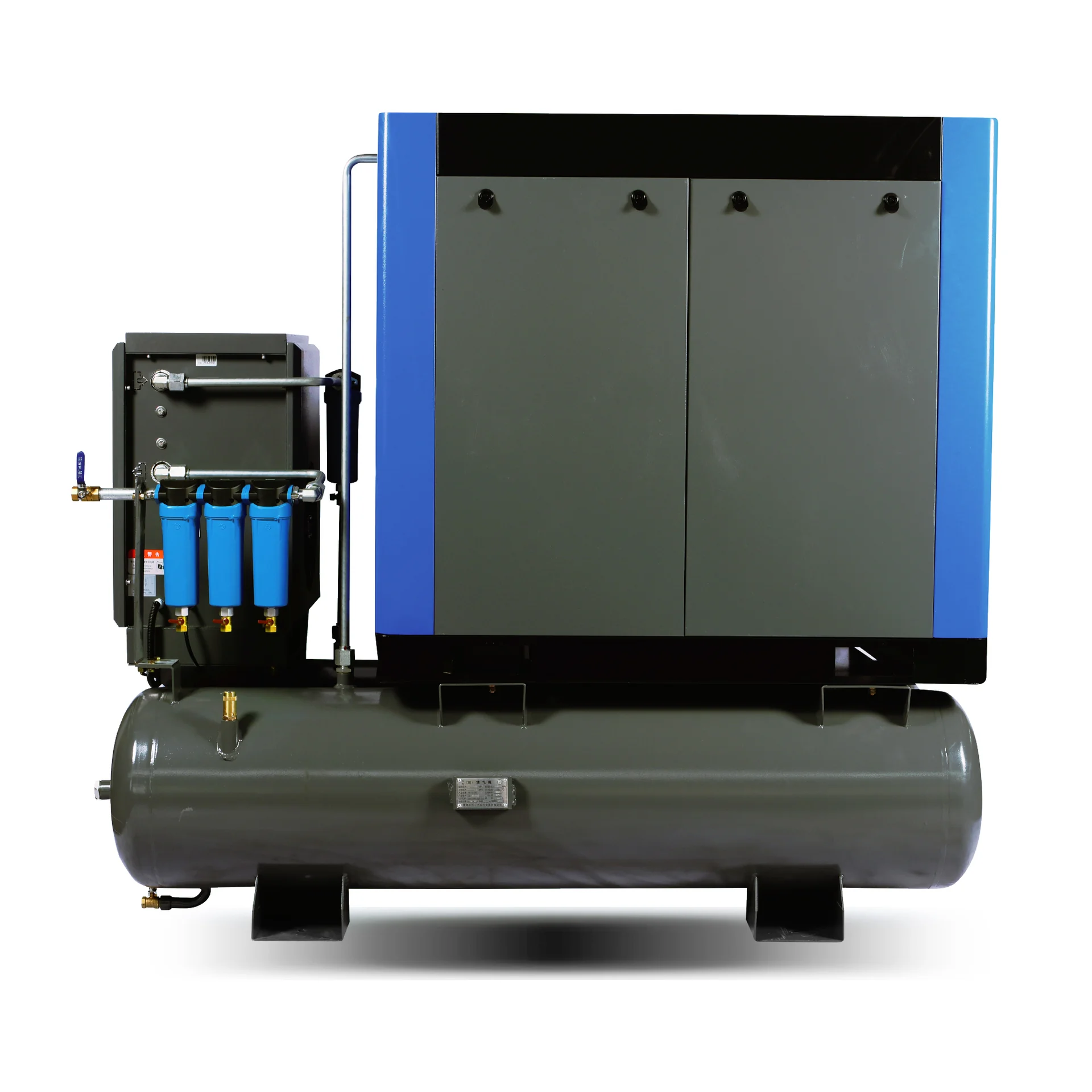
Rear view of a tank-mounted compressor with three filter housings
Complete-package rating reference
Specification Unit Required definition
Operating discharge pressure bar(g) or MPa(g) State the gauge-pressure setting and normal control band
Required point-of-use pressure bar(g) Measure while the connected process is consuming air
Free air delivery, where used m³/min FAD or cfm FAD State reference conditions and the pressure at which output is rated
Motor rating / package input kW Distinguish nominal motor size from measured total package demand
Control type and usable flow range Fixed speed or variable speed; m³/min Relate minimum and maximum output to the actual load profile
Receiver volume L or m³ Check working pressure and usable storage over the control band
Dryer capacity m³/min at specified conditions Include inlet temperature, pressure, ambient temperature and correction factors
Pressure dew point °C at operating pressure Match moisture sensitivity and the coldest relevant downstream conditions
Air-quality limits Specified particle, water and oil limits Use the connected machine’s documented requirements
Installation envelope L × W × H, mm; mass, kg Include door opening, filter removal, ventilation and maintenance access

For unit comparison, 1 MPa equals 10 bar. Gauge and absolute pressure are different references, and flow values expressed at different reference conditions should not be compared directly.

Compare output and electricity on the same basis

Package input power divided by delivered flow gives a useful specific-power comparison when pressure, reference conditions and included equipment are equivalent. The drive motor’s nameplate rating alone does not include every package loss, and a full-load result does not describe an entire shift with long unloaded periods.

For an illustrative energy comparison, a measured average difference of 2 kW over 4,000 operating hours equals 8,000 kWh. This is arithmetic, not a CHENDA savings claim. The measured average must cover the same demand and pressure, with the same treatment boundary, before it becomes useful for comparing two proposed systems.

Technical drawings with a calculator and drafting compass
Use equivalent rating conditions and measured operating hours

Samples & Demonstration

The useful demonstration is system behavior under load. For an existing workshop, provide a pressure-and-demand record across representative production periods, including machine starts and peak simultaneous use. For a proposed installation, define a load sequence based on the machines that will be connected.

Assess pressure at the user connection while air is flowing, recovery after demand changes, dryer operation and the specified air-quality result. For air-assisted laser cutting, add a cut trial using the intended material and nozzle conditions. A stable compressor display with no downstream load does not demonstrate that the cutting head will receive enough air during production.

Gas-line assembly with LEFOO pressure switches and SMC filter units
Pressure-switch and filter assembly · connection reference
Operating symptom Possible system cause Evidence that separates the causes
Pressure drops only when another machine starts Short peak demand or a shared restriction Time-aligned pressure readings and the equipment start sequence
Compressor pressure is stable but remote pressure falls Distribution or treatment pressure loss Measurements across filters, piping and final connection
Water appears downstream Drain failure, dryer loading or unfavorable operating conditions Drain function, inlet conditions and loaded dryer performance
Frequent loading and unloading Demand/control/storage mismatch or leakage Load history, pressure band and an off-production demand check

The system review should identify the cause before recommending additional installed power. A filter replacement or distribution change and a larger compressor solve different problems.

Configuration & Options

Discuss the compressor, control system, cooling method, receiver, dryer, filters, drains and distribution connections as a complete arrangement. An integrated package can simplify placement, while separate components may make capacity changes or service access easier. Confirm the exact inclusion of each item.

Possible project options include variable-speed control, additional storage, automatic drains, point-of-use filtration, monitoring and multi-compressor coordination. A dedicated higher-pressure circuit or booster requires its own pressure, flow and component-rating review; do not assume every workshop receiver, dryer or hose can serve it.

Allow for the treatment system’s own consumption where applicable, as well as leakage and planned additional demand. State these allowances instead of hiding them in an oversized motor selection.

Rear view of a skid-mounted air system with vertical receiver and dryer
System service connections · layout reference

Tank-mounted package or separate skid arrangement?

A tank-mounted package brings the compressor and associated components into a compact footprint, which can suit a dedicated machine station. Its practical layout still needs space for door opening, filter-bowl removal, dryer cooling and access to the receiver drain. A skid with a vertical receiver changes the floor-space and access arrangement; separately positioned treatment can offer more flexibility when components need different service clearances.

The number of visible filter housings does not define air purity. Each element needs an identified duty, rated flow, operating-pressure range and maintenance requirement. Likewise, an integrated dryer is useful only if it can handle the actual inlet temperature and flow under the site’s operating conditions.

Rear view of a tank-mounted compressor with three filter housings
Tank-mounted package · configuration reference
Skid-mounted air compressor with a vertical air receiver
Skid with vertical receiver · separate configuration reference

Applications & Workflow

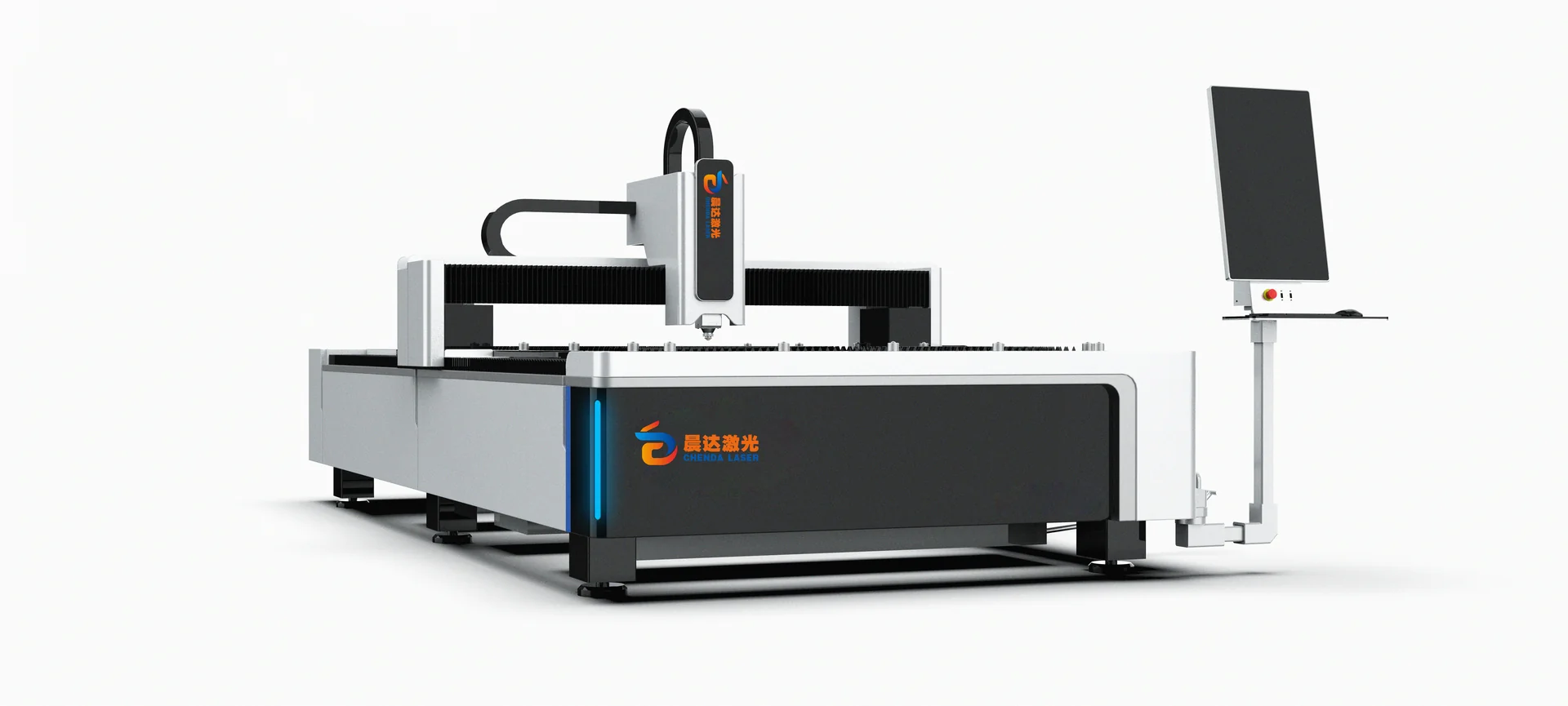
CHENDA-branded open sheet laser cutter with cutting table, gantry and operator console
Coordinate the air package with the connected manufacturing process

For a laser workshop, separate the cutting-gas requirement from ordinary machine pneumatics. This can reveal whether a shared system is practical or whether different pressure or air-quality needs justify separate circuits. Check pressure at the furthest or most demanding consumer rather than only beside the compressor.

For mixed manufacturing, map the daily operating sequence and identify which large air users overlap. Then size generation and storage, select treatment, plan distribution and verify the result during commissioning. As production grows, review the demand record again; replacing a compressor may not solve a restrictive pipe, clogged filter or persistent leak.

A cutting machine running a long contour creates a different air-demand pattern from a clamping circuit that consumes brief bursts. If both share a supply, the short burst should not pull the cutting process below its required pressure. The solution may involve distribution, local storage or generation capacity, depending on the measured event. This is the connection between system design and stable production quality.

Installation & Support

Provide a location with the ventilation, ambient conditions and service clearances required by the selected package. Keep cooling-air paths clear and consider hot-air discharge so it does not recirculate into the inlet. Allow room to remove filters, service the air end and inspect drains and receiver connections.

Confirm electrical supply, isolation, condensate handling and the responsibilities for pressure equipment at the destination. Commissioning should check rotation where applicable, leaks, control settings, drainage and loaded system performance. Service intervals and lubricants must follow the supplied model’s instructions.

Access is a maintenance requirement, not spare space. A filter that cannot be opened without moving a neighboring machine is more likely to cause an avoidable service interruption. Keep the package layout tied to the workshop plan and retain the compressor, dryer and filter identities together in the handover record.

Rear view of a skid-mounted air system with vertical receiver and dryer
Keep drains, valves and service points accessible
Skid-mounted air system showing a dryer and filter bank
Document generation, storage and treatment together

Technical Resources

Request a pressure-versus-flow datasheet, electrical input information, package layout, treatment specification and maintenance schedule. For variable-speed equipment, include the operating range and part-load data needed to compare it with your demand. For a laser-cutting package, retain the cutting machine’s required air specification with the compressor proposal.

Product FAQs

Skid-mounted air compressor with a vertical air receiver
Visual reference · to be replaced
Blue tank-mounted air compressor and separate dryer cabinet outdoors
Package output reference

Can we select a compressor from motor power alone?

No. Two packages with similar motor ratings can deliver different flows at different pressures. Compare rated delivery at the pressure needed by the system, including treatment and distribution losses.

Vertical compressed-air receiver tank with a pressure gauge
Air storage reference · Kdarek561 · Public domain (author dedication worldwide)

Will a larger receiver solve low pressure?

It may help short demand peaks. If average demand remains above the compressor’s output, pressure will still fall as stored air is consumed. Identify the duration and cause of the shortage first.

Skid-mounted air compressor with a vertical air receiver
Confirm the proposed control type

Is variable speed always the best choice?

It is most useful when the demand profile suits its controllable range. Compare actual operating hours and load variation, including low-demand periods, before selecting the control type.

Blue refrigerated compressed-air dryer photographed outdoors
Air drying reference · Berpi · Public domain (author dedication worldwide)

Does a filter make the air dry?

A filter can remove specified particles or liquid aerosols, but water vapor needs appropriate drying. The required pressure dew point determines the drying duty.

Installed laser cutting head above a metal sheet and slatted cutting table
Cutting-process requirement

Can workshop air replace nitrogen for laser cutting?

Only for a cutting process approved for air and its resulting edge condition. Nitrogen and air interact differently with the cut. Material, thickness, oxidation tolerance and downstream finishing must be evaluated.

Two red compressed-air filter and pressure-regulator components
Connection and pressure-loss reference · Honmingjun · CC BY-SA 4.0

Should the pressure simply be set higher to overcome losses?

Find the cause first. Undersized distribution, restrictions or loaded filters can waste pressure and energy. The final setting must also remain within every connected component’s permitted operating conditions.

Request a Quote

Send the list of air consumers, required pressure and flow for each, hours per shift, simultaneous-use pattern, air-quality requirements and planned expansion. Include local voltage, ambient temperature, installation space and approximate pipe distance to the main user. If a system already exists, add the current compressor data and pressure observations under load.

Skid-mounted air system showing a dryer and filter bank
Define the complete air system around the connected demand