
Jump to a section
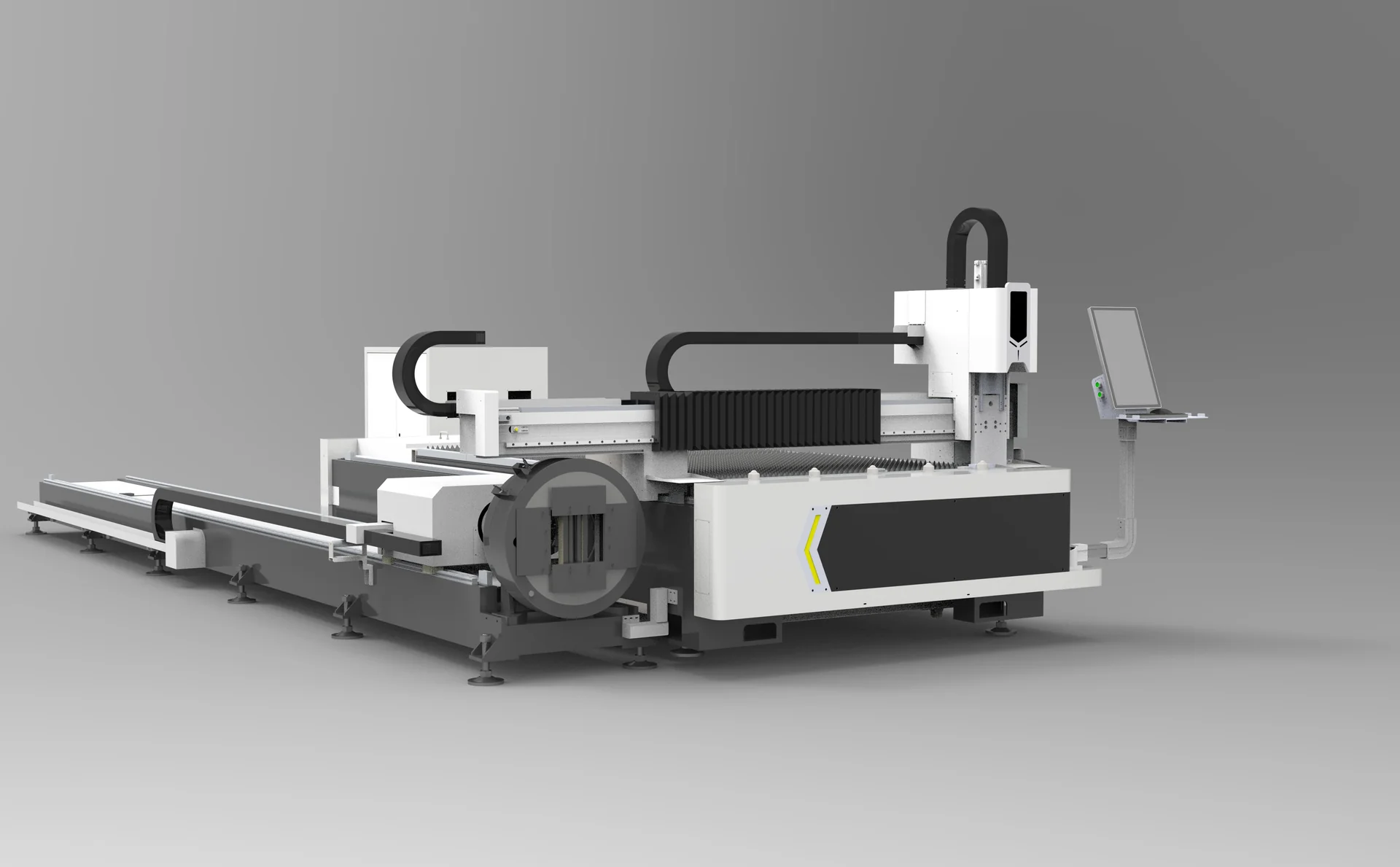
Quick answer: A 2-in-1 sheet and tube laser can reduce the number of machines you buy, but both jobs must share its cutting time. Choosing between one combined machine and separate machines is mainly a scheduling decision.
- Start with a sheet and tube machine when sheet is your main work, tube work is regular but lighter, and the two jobs can take turns.
- Compare separate machines when both streams are often urgent, tube volume is high, or tube work needs dedicated handling.
- Consider a sheet machine plus outside tube cutting when tube demand is still small or uncertain.
| Factor | 2-in-1 machine | Separate sheet and tube machines |
|---|---|---|
| Cutting capacity | One shared cutting resource | Two independent resources |
| Urgent orders | One job may wait for the other | Each stream has its own machine |
| Sheet-to-tube change | Must be scheduled | Not needed |
| Floor plan | One combined layout | Two layouts and material paths |
| Tube handling | Confirm the exact package | Dedicated options can be compared |
| Machine stop | Can affect both streams | The other machine can keep running |
| Initial investment | Usually lower than two machines | Usually higher |
Not sure which setup fits your week? Send CHENDA one typical sheet part, one typical tube part and your weekly hours. Request a Recommendation · Email info@chendalaser.com · Phone +86 153 0644 7102
Start With Your Weekly Workload
Count the hours each stream needs in a normal week before comparing machine features. The examples below are hypothetical, based on a 40-hour week, and are not CHENDA production figures.
| Example | Sheet hours | Tube hours | Changeovers (30 min each) | Total hours | Share of 40 hours |
|---|---|---|---|---|---|
| Workshop A | 12 | 5 | 4 | 19 | 48% |
| Workshop B | 24 | 10 | 8 | 38 | 95% |
Workshop A has room for urgent work, maintenance and growth, so one 2-in-1 machine is a strong candidate.
Workshop B needs a closer look. It can fit the work on paper, but a rush order or service stop would quickly cause delays. Here are its main options:
| Option for Workshop B | Weekly load | Main trade-off |
|---|---|---|
| One 2-in-1 machine, same schedule | 38 of 40 hours (95%) | Very little spare time |
| One 2-in-1 machine, with 5 tube hours outsourced and 4 changeovers | 31 of 40 hours (78%) | Outside cost and lead time |
| Separate machines | Sheet: 24 of 40 hours (60%). Tube: 10 of 40 hours (25%) | Higher investment and a tube machine that is idle much of the week |
This comparison shows why more machines are not automatically better. Separate machines remove the conflict, but Workshop B must decide whether that is worth the investment and idle tube capacity. The separate-machine figures exclude setup between jobs, so add your real setup time.
Use your own hours, including loading, unloading, sorting and first-part checks.
Measure the Changeover
The switch between sheet and tube work can cost more than the button press suggests. Measure from the last accepted part of one job to the first accepted part of the next.
The number of switches matters too. Two planned tube blocks per day are easier to manage than many small tube orders mixed through every shift. If urgent orders prevent grouping, compare separate machines or outside cutting.
We did not find a reliable general figure for this switch. Claims such as "in minutes" do not show the full work, so time it on the proposed machine.
Tube Handling
Cutting a tube is only part of the cycle. Time loading, positioning and part removal as well, because these steps can decide tube output.
Before choosing a machine, confirm:
- Tube shape, outside dimensions and wall thickness
- Stock length and weight per tube
- Shortest and longest finished part
- Tube length left after the last part
- How finished parts leave the machine without damage
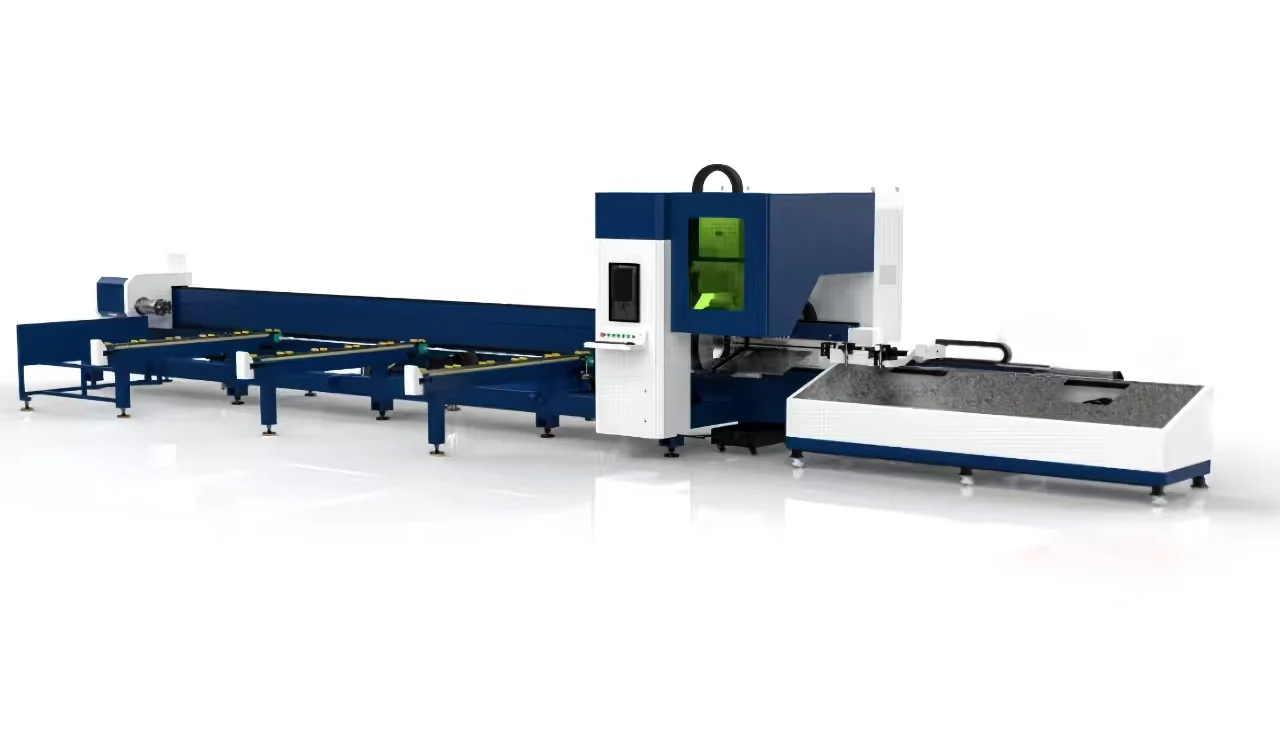
A catalog diameter range applies to round tube. Ask for square, rectangular and open-section limits separately.
Automatic bundle loading can make a dedicated tube laser more attractive when tube volume is high. Bundle loaders generally do not suit open sections such as angles and channels. The CHENDA TA series lists automatic loading and unloading for round, square and rectangular tube, with a 3.0 t stock limit and 150 mm shortest pipe oddment.
Compare the remnant too. A 200 mm tail on a 5,000 mm tube is 4% of the tube. Published minimum figures vary widely: one two-chuck specification lists 30 mm, one three-chuck specification lists 0 mm, and the CHENDA TA lists 150 mm. Check the number with your tube size, weight and part length, because each figure has its own conditions.
For heavy beams and channels, review a profile laser cutting machine as well.
Floor Plan and Material Flow
A combined machine saves a second machine footprint, but it does not remove the need for two material routes. Draw how each material enters and leaves the machine.
Check the straight run needed for full-length tube and the working room needed for sheet handling. Then mark:
- Raw sheet and tube storage
- Sheet skeleton and tube remnant removal
- Extraction and gas supply
- Finished-part sorting
- Service access
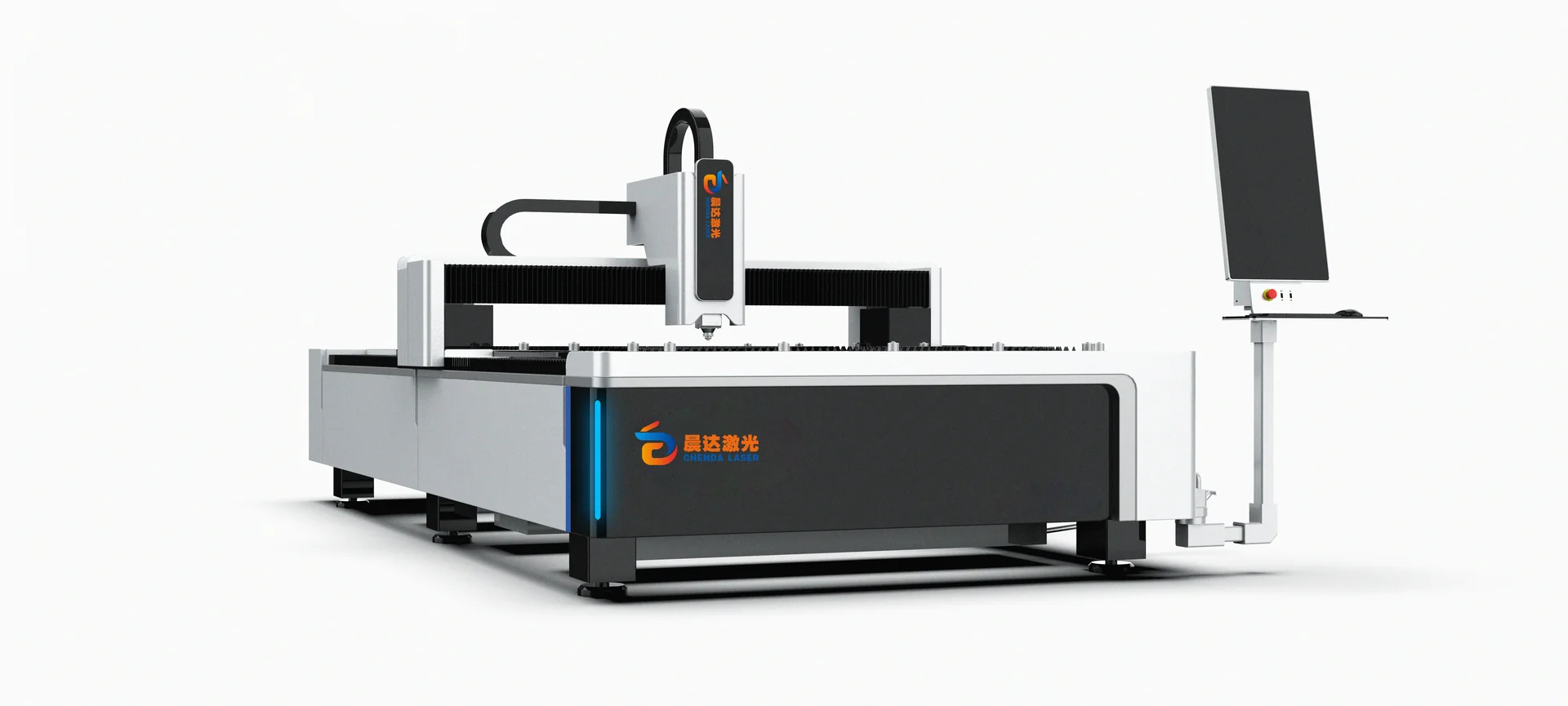
Separate machines need more floor area, but they can keep sheet and tube handling apart. Compare the two layouts before assuming that one machine is the better use of space.
Total Cost: Compare the Full Week
One combined machine usually costs less than two complete machines. Your total cost also depends on what happens after installation.
| Cost item | What to compare |
|---|---|
| Machine investment | Exact configuration, tube section, automation and installation |
| Waiting time | The cost of late orders when the shared machine is busy |
| Idle capacity | Hours a separate tube or sheet machine has no work |
| Labor | Operators, material handling and sorting |
| Tube remnant | Material left after each program |
| Outside cutting | Price, lead time and quality of subcontracted work |
| Machine stop | Orders affected if one machine is out of service |
If laser power is part of the decision, read our 3kW vs 6kW fiber laser guide. Test sheet and tube separately, because power suited to one may not settle the other.
Which Option Fits Your Work?
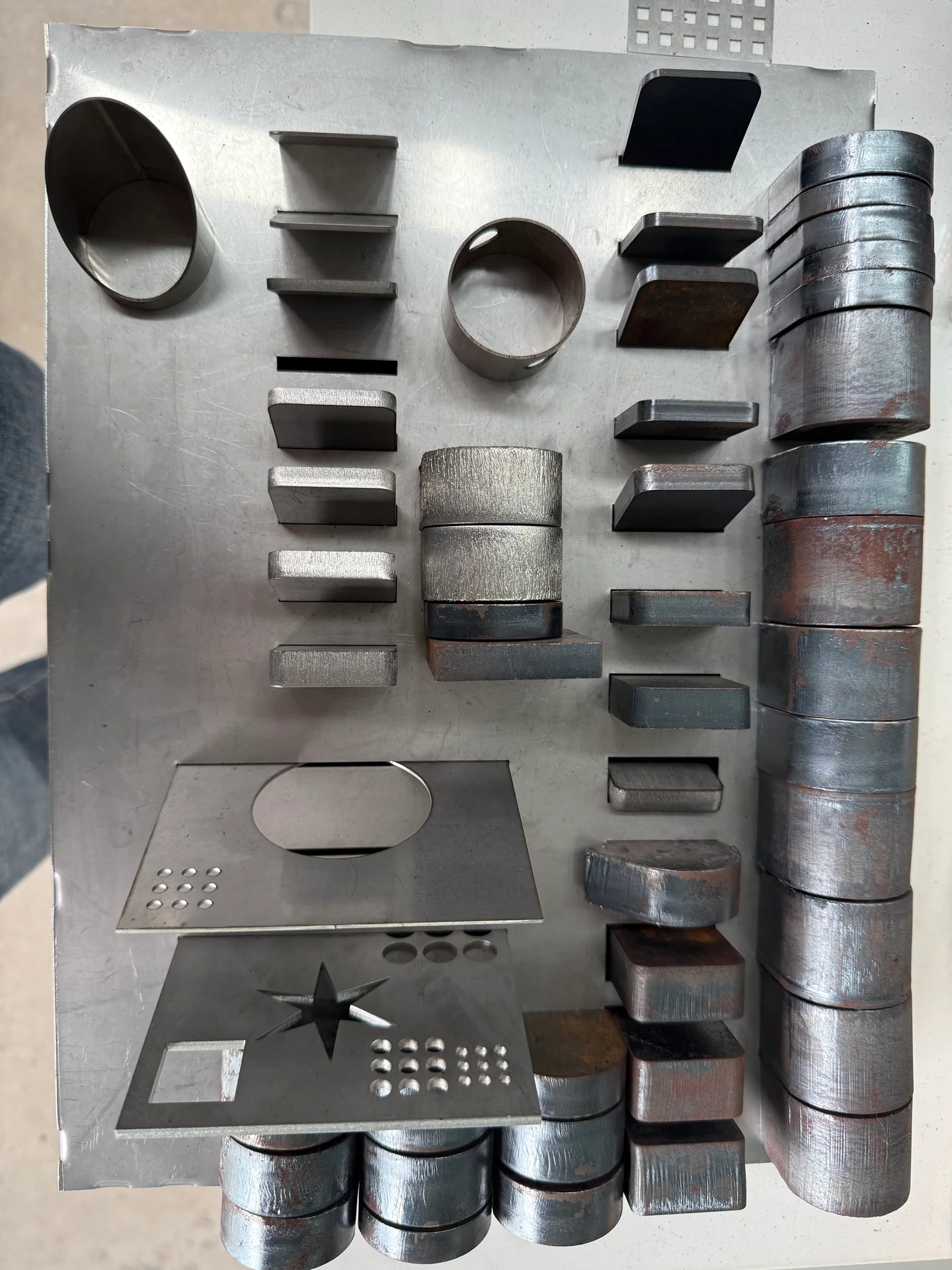
Use the table below as a starting point, then check it against your own weekly hours.
For related production routes, review sheet metal fabrication and steel structure applications.
| Your situation | Better starting point | Why |
|---|---|---|
| Mostly sheet, with regular small tube batches | 2-in-1 machine | Tube work can share the machine without constant conflict |
| Furniture or frames with balanced sheet and tube work | Compare both | Urgency and changeover count decide |
| Tube cutting most days, with bundle-fed stock | Dedicated tube laser | Tube handling and automation may matter most |
| Large rush orders in both streams | Separate machines | One stream does not wait for the other |
| Tube demand is still uncertain | Sheet machine plus outside tube cutting | Lets you measure demand before adding tube capacity |
| Heavy beams and channels | Profile machine review | Section geometry and load need a separate check |
Compare the CHENDA Options
The CHENDA catalog separates combined and dedicated machines into several series. Confirm the exact configuration on your quotation.
| Catalog item | HT open 2-in-1 | GT enclosed 2-in-1 | CHD-T120, T160 and T220 | CHD-T240 and T360 | TA automatic tube |
|---|---|---|---|---|---|
| Tube length | 6 m | 3 m or 6 m | 6.5 m | 6.5 m or 9.2 m | 2.5-6.5 m |
| Tube clamping | T160: 10-160 mm; T240: Ø10-240 mm | Ø10-240 mm | Ø16-120 mm; Ø10-160 mm; Ø10-220 mm | Ø20-240 mm; Ø20-360 mm | Round and square: 20-240 mm |
| Laser power | 1.5-6 kW | 1.5-6 kW | 1.5-4 kW | 1.5-4 kW | 1.5-4 kW |
| Main motion figure | 120 m/min; 1.0 G | 150 m/min; 1.5 G | Feed 125 m/min; 1.5 G | Feed 160 m/min; 1.5 G | Feed 160 m/min; 1.5 G |
| Stated load | T240: 280 kg; 44 kg/m | Not listed | Not listed | Not listed | 200 kg; 30 kg/m |
Read this table with care:
- HT sheet areas run from 1,500 × 3,000 mm to 2,500 × 6,000 mm across five models. The GT table lists one 1,500 × 3,000 mm size.
- The 2-in-1 motion figures are for the machine’s linkage speed, while the tube-series figures are for chuck-axis feed. Do not compare them directly.
- The catalog lists automatic loading for TA, and says T can be matched with automation modules. It lists none for HT or GT, so ask before assuming it is available.
- Trade guidance says tube lasers usually need no more than about 5 kW, so a higher maximum power does not show that a 2-in-1 machine cuts tube better. Compare the same tube on both machines.
Review the sheet and tube laser cutting machine, tube laser cutting machines and sheet metal laser cutting machines, or browse the full laser cutting range.
Frequently Asked Questions
What share of tube work justifies a dedicated tube laser?
There is no universal percentage. One supplier guide treats about 70% tube work as tube-heavy, but use that only as a starting point. Look at weekly tube hours, how often tube jobs wait and whether tube loading limits output.
Can I start with a 2-in-1 machine and add a tube laser later?
That can be a practical path if demand is uncertain. Keep floor space and utility capacity in mind, and ask whether your programs and tube data can move to the later machine.
Is outside tube cutting better at low volume?
It can be, especially while demand is uncertain. Compare the price, lead time and quality with the cost of machine time and handling in your own shop.
Will a 2-in-1 machine cut tube as well as a dedicated tube laser?
Do not assume either result. Test the same tube on both, then compare cut quality, loading time, part removal and the length left after the last part.
Request a Recommendation
Send one typical sheet part, one typical tube part and your normal weekly hours for each. CHENDA can then compare one combined machine with separate machines around your production plan.
Get a laser cutting quote or email info@chendalaser.com.