Jump to a section
- 1. The Cutting Process Decides the Route
- 2. Deburring, Edge Rounding, Oxide Removal, Finishing
- 3. How Much Edge Radius Do You Need?
- 4. Oxide on Oxygen-Cut Laser Parts
- 5. Plasma and Flame-Cut Dross and Slag
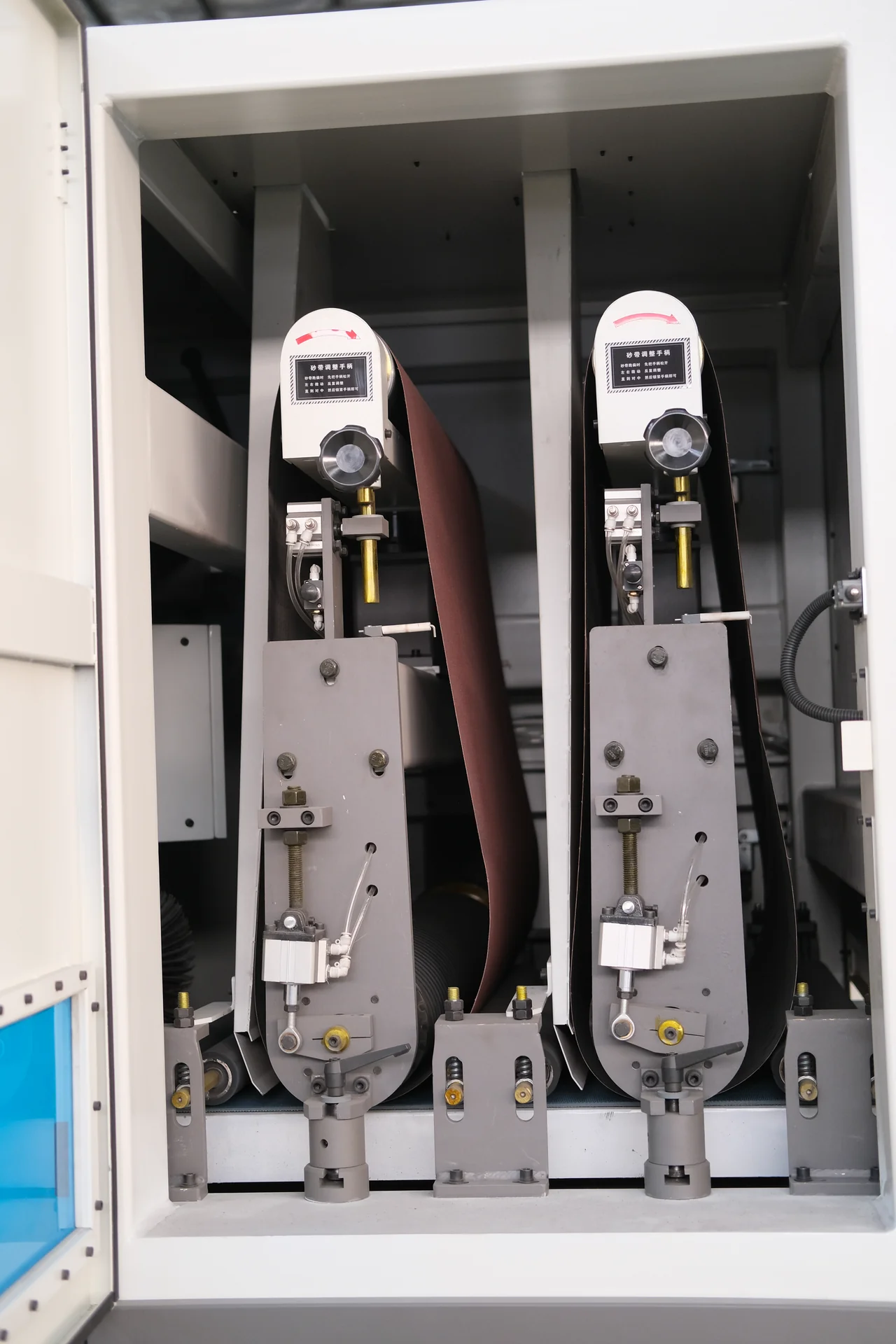
- 6. Deburring Machine Types Compared
- 7. Station Order and Part Retention
- 8. Dry or Wet Deburring?
- 9. How to Run a Useful Trial
- 10. Frequently Asked Questions
- Request a Recommendation
Quick answer:
- Laser-cut parts usually need light burr removal and edge rounding. Parts cut with oxygen also carry an oxide layer on the cut edge that should be removed before powder coating or painting.
- Plasma-cut parts often carry dross on the bottom edge. Thick, globular low-speed dross and top spatter come off relatively easily; hard, rolled-over high-speed dross is far more tenacious.
- Flame-cut (oxy-fuel) plate typically carries the heaviest slag and needs a dedicated slag-removal stage before any finer finishing head.
- Edge radius: a sharp 90° edge cannot hold a proper coating film. UK structural steel guidance considers a radius of about 2 mm generally sufficient before painting, about 1 mm adequate with modern high-build coatings, and some specifiers require 3 mm.
| Cutting method | Typical edge condition | First station | Follow-up |
|---|---|---|---|
| Fiber laser, nitrogen | Small burr, sharp edge, oxide-free | Light deburring | Edge rounding; face finish if visible |
| Fiber laser, oxygen | Small burr, sharp edge, oxide layer on cut face | Deburring | Oxide removal and rounding before coating |
| Plasma | Bottom dross, possible top spatter, heat-affected edge | Dross / slag removal | Deburring and edge rounding |
| Flame (oxy-fuel) | Heavy adherent slag on thick plate | Dedicated slag-removal stage | Deburring, rounding, sometimes blasting |
| Punching | Burr on die side, rollover on punch side | Deburring | Edge rounding |
Scroll horizontally to view all columns on smaller screens
This guide gives general process guidance and cites published industry sources. It is not a CHENDA test report. Confirm the station sequence with a trial on your own parts.
Not sure which stations your parts need? Send CHENDA close-up photos of your incoming edges, the material and thickness range, and the finish you need after deburring. We will propose a station sequence and a trial plan. Request a Deburring Recommendation · Email info@chendalaser.com · Phone +86 153 0644 7102
1. The Cutting Process Decides the Deburring Route
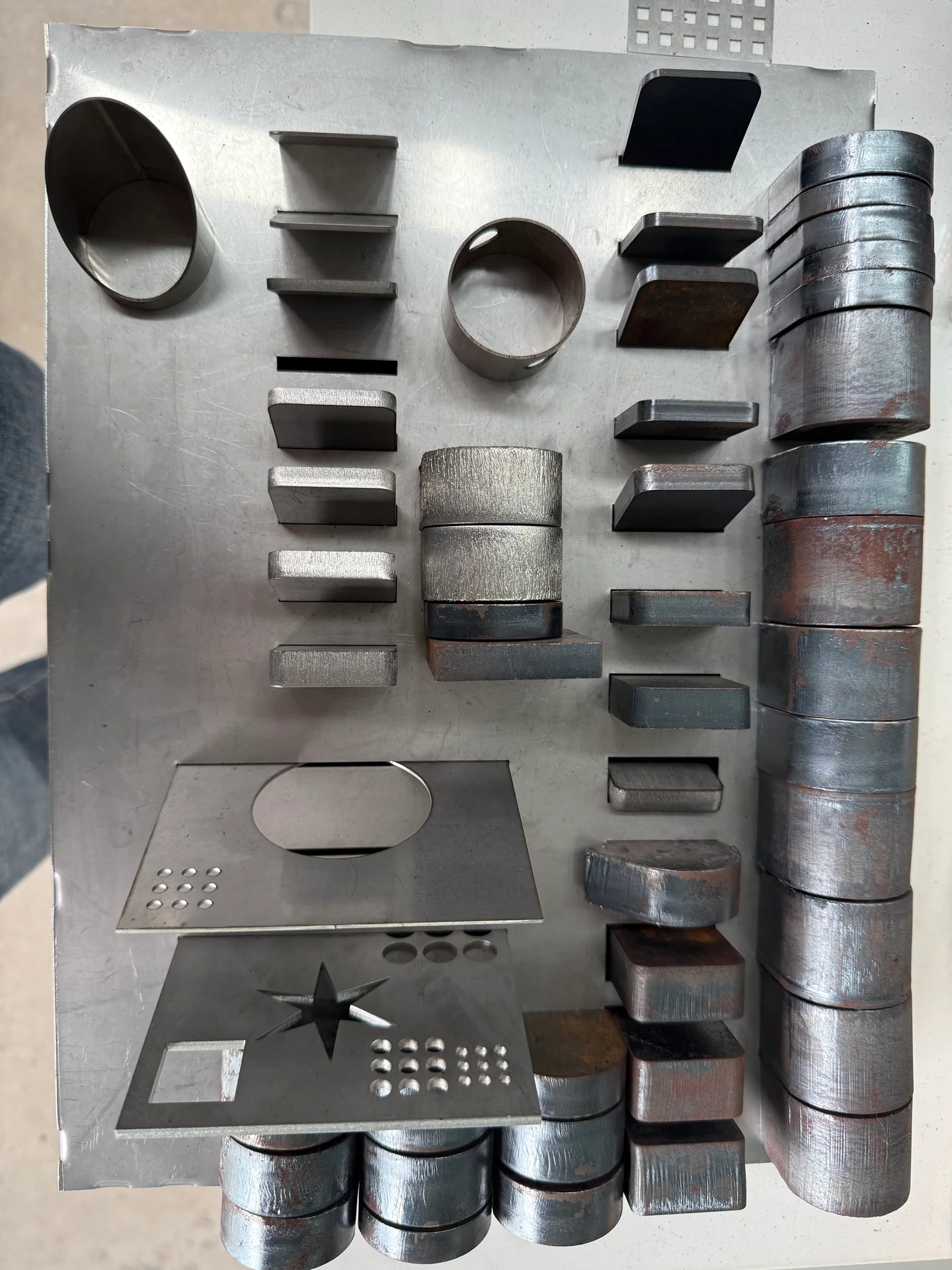
“Deburring” is often used for every edge problem, but a laser-cut cabinet panel, a plasma-cut bracket and a flame-cut base plate leave very different edges. Choosing a machine before identifying the incoming defect is the most common reason a deburring line underperforms.
Start with three questions:
- What is on the edge? A raised burr, re-solidified dross, heavy slag, an oxide layer, or simply a sharp corner.
- What happens next? Bending, welding, powder coating, painting, or direct assembly as a visible part.
- Which surfaces matter? Outer perimeter only, internal holes and slots, one face or both faces.
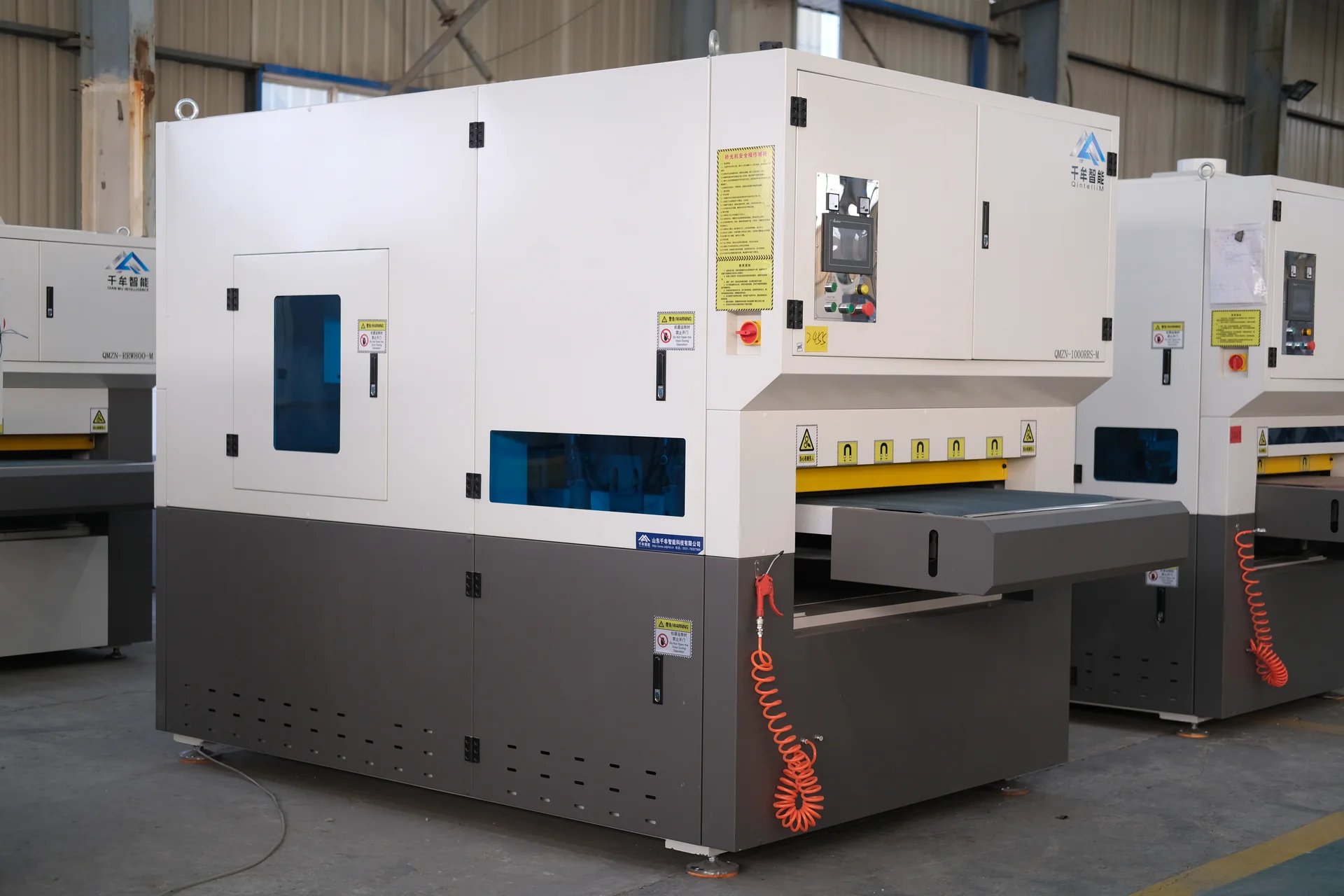
In sheet metal fabrication, deburring normally follows cutting and comes before bending. The blank is still flat, so every cutout is accessible to belts and brushes. Once the part is formed into a box, internal edges become hard to reach.
2. Deburring, Edge Rounding, Oxide Removal and Surface Finishing Are Different Jobs
| Operation | What it does | Typical tool | How to specify the result |
|---|---|---|---|
| Slag / dross removal | Removes heavy re-solidified metal from the bottom edge | Dedicated aggressive pre-stage | No adherent slag remaining |
| Deburring | Removes the raised projection above the sheet face | Abrasive belt or wheel | Maximum remaining burr height |
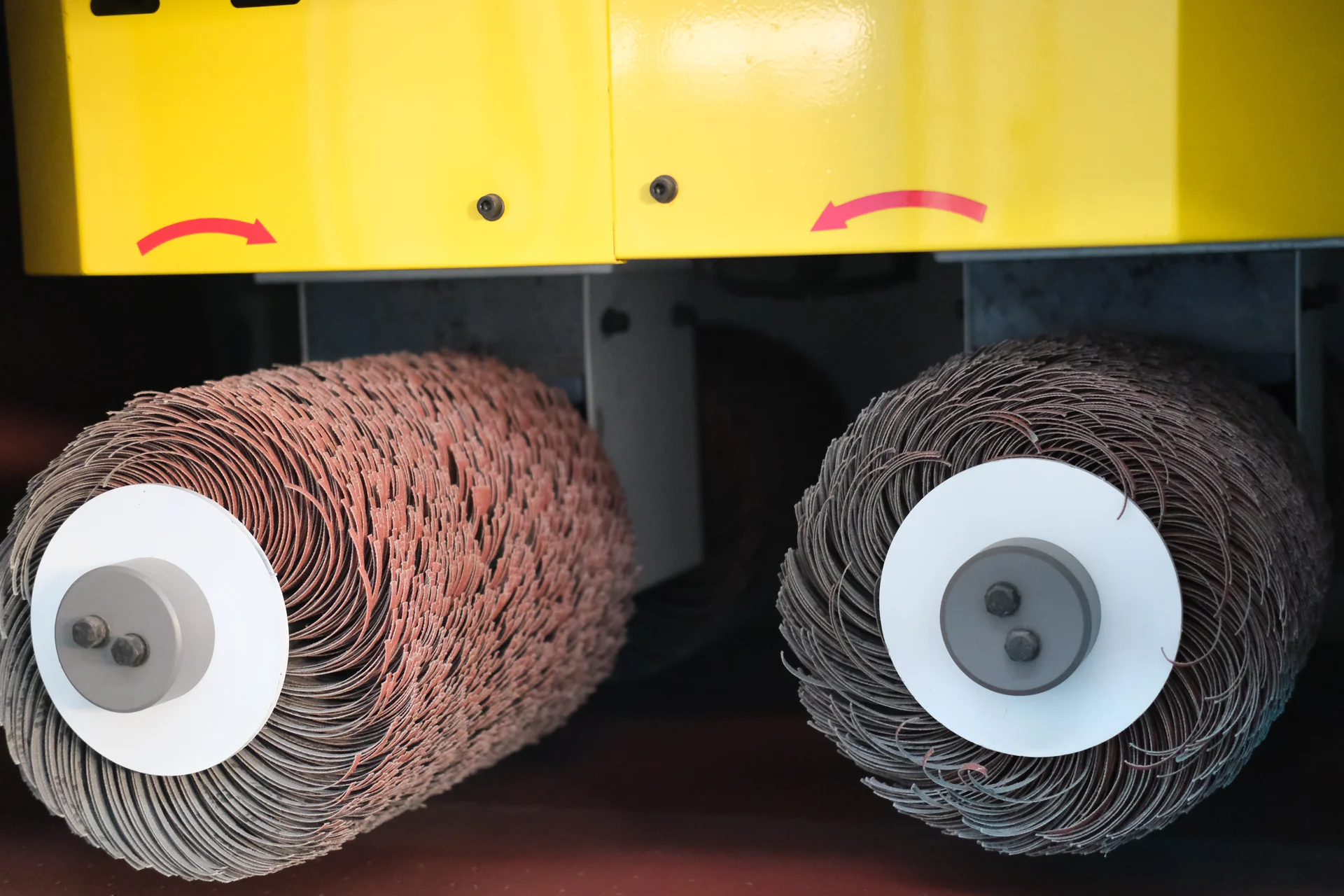
| Edge rounding | Changes a sharp corner into a radius | Rotating abrasive brushes | Radius in mm on outer edges and holes |
| Oxide removal | Removes the oxide layer from the cut face | Brushes working the edge face | Oxide condition required by the coater |
| Surface finishing | Creates a consistent face pattern | Finishing belt | Grain direction, Ra value or approved sample |
Scroll horizontally to view all columns on smaller screens
A part can be burr-free and still sharp. Deburring removes a projection; rounding changes the edge geometry. If your drawing says “deburr”, decide whether you also need a radius, and how much.
3. How Much Edge Radius Do You Need?
Liquid paint and powder pull away from a sharp corner, so a 90° outside edge cannot be covered properly and is where corrosion usually starts. Larger radii cost more removal time and abrasive, so specify the smallest radius that meets the real requirement. Guidance from the UK Steel Construction Institute (SCI) gives these reference points for painted steel:
| Requirement | Radius | Notes |
|---|---|---|
| Touch-safe handling and assembly | light radius, burr-free | Agree a reference sample rather than a number |
| Painting with modern high-build coatings and stripe coats | about 1 mm | Considered adequate by some specifiers |
| Painted structural steel, general guidance | about 2 mm | Generally considered sufficient; a 45° chamfer can also work |
| Demanding infrastructure specifications | 3 mm minimum | Specified by some owners; check the project specification |
Scroll horizontally to view all columns on smaller screens
Two practical points:
- Aim for a uniform radius. Coating film is thinnest where the edge is sharpest, so an asymmetric edge with one sharp side can still fail.
- Do not copy a radius onto every drawing. A large radius specified “just in case” on thick plate adds cost and abrasive wear without a functional benefit.
4. Oxide on Oxygen-Cut Laser Parts: Why Coaters Reject It
Cutting carbon steel with oxygen is fast and inexpensive because the oxygen reaction adds heat to the cut. Nitrogen cutting, which leaves an oxide-free edge, can cost five to six times as much in gas. The trade-off is an oxide layer on the cut face.
Paint and powder coat bond well to that oxide at first, but the oxide itself is not permanently bonded to the steel. If the coating is damaged in service, coated sections can flake off with the oxide underneath, especially on outdoor parts.
- Removal methods: sanding, grinding, chipping and blasting all work. Manual work is slow and inconsistent on irregular parts, which is why brush-type oxide-removal machines that work the edge faces are used in production.
- How much to remove: one machine vendor’s guidance is that about 70% oxide removal can meet powder-coating quality standards, but many OEMs still require 100%. Agree the target with your coater.
- Feed speed matters: in one published example, slowing the conveyor removed nearly all oxide, while a faster feed left some on the edges. Expect a throughput trade-off on thick oxygen-cut parts.
Cutting with oxygen and powder coating afterwards? Send CHENDA a few oxygen-cut parts and your coater’s requirement. We will test oxide removal and rounding together so you can compare against nitrogen cutting costs. Request an Oxide-Removal Trial · info@chendalaser.com
5. Plasma and Flame-Cut Parts: Dross and Slag First
Industry guidance published by The Fabricator describes three kinds of plasma dross, and they behave very differently in a deburring machine:
| Dross type | What it looks like | Usual cause | Removal |
|---|---|---|---|
| Low-speed dross | Thick, globular metal along the bottom edge | Cutting too slowly, too much amperage, low standoff | Bulky but usually removable with a slag stage |
| High-speed dross | Small, hard bead of uncut metal (“rollover”) | Cutting too fast, high standoff, low amperage | Hard; usually needs extensive machining |
| Top spatter | Re-solidified droplets on the top surface | Worn nozzle, excessive speed, high standoff | Usually very easy to remove |
Scroll horizontally to view all columns on smaller screens
Fix the cut before buying abrasives. High-speed dross is a cutting-parameter problem. Correcting speed, standoff and consumables on the plasma table is usually cheaper than grinding it off every part.
Flame-cut plate typically carries heavier slag than plasma, on thicker material. Feeding it straight into a finishing belt overloads the abrasive and shortens its life. A dedicated slag-removal stage in front of the deburring and rounding heads protects the finer stations and keeps the finish consistent.
6. Deburring Machine Types Compared
| Machine / head type | Best for | Limits |
|---|---|---|
| Wide abrasive belt | Burr and light dross removal; flat face finish | Does not round edges or reach inside holes well |
| Rotating brush heads (rollers or disc brushes) | Edge rounding of outer contours, holes and slots; oxide removal | Slow on heavy dross; brushes wear and change the result |
| Dedicated slag-removal stage | Heavy plasma and flame-cut slag | Aggressive; not a finishing step |
| Combined belt + brush machine | Burr removal and rounding in one pass | Station order must match the required result |
| Single-sided vs double-sided | Single-sided suits most blanks; double-sided treats both faces in one pass | Single-sided parts may need turning and a second pass |
| Manual grinder or hand tool | Very low volume, one-off parts | Slow, inconsistent, operator fatigue and injury risk |
Scroll horizontally to view all columns on smaller screens
Width and conveyor speed are only part of capacity. A wide, fast machine may still need several passes, or a manual flip, to finish both faces of a part.
7. Station Order and Part Retention
The order of the heads determines the finished part:
- Burr removal, then touch-safe edges: removal belt first, then rounding brushes.
- Consistent visible grain after rounding: edge treatment first, finishing belt last, because the final station sets the visible pattern.
- Heavy dross, then fine finish: slag stage first so finishing abrasives are not used for bulk removal.
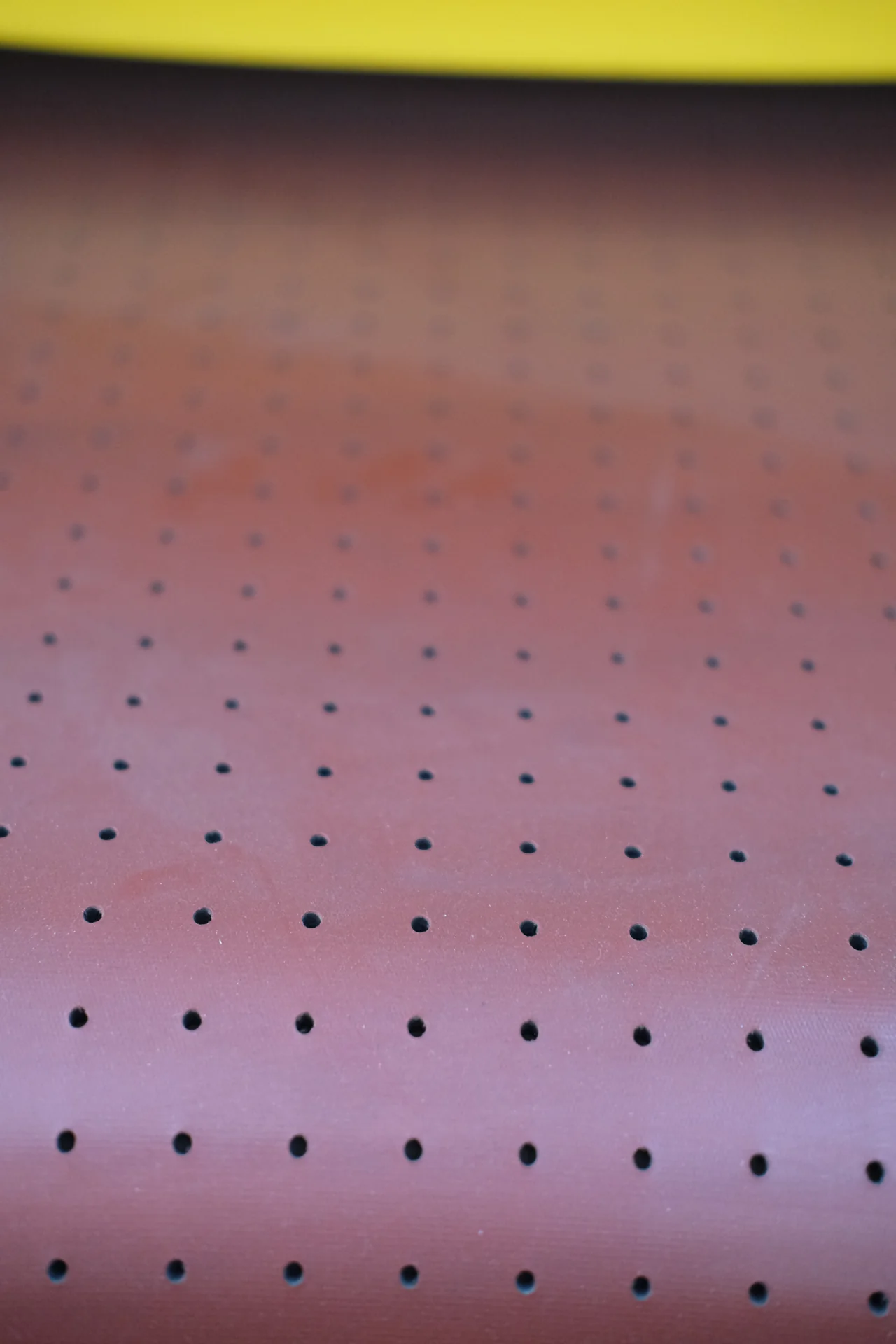
Small parts are limited by retention, not width. Magnetic retention only works with ferromagnetic material; vacuum retention can help with stainless and aluminum, but contact area matters. A large perforated grille can be harder to hold than a smaller solid plate, and narrow strips can lift or turn under brush forces. Always test your smallest, most perforated and least stable parts.
8. Dry or Wet Deburring?
| Dry deburring with extraction | Wet deburring | |
|---|---|---|
| How it works | Abrasives run dry; dust is captured by an extraction system | Coolant or lubricant is sprayed over the abrasive heads |
| Advantages | No fluid, no sludge, parts come out dry | Low dust, cooler parts, more consistent finish, longer abrasive life |
| Drawbacks | Dust and spark management; fire risk from fine dust | Sludge disposal, fluid maintenance, parts may need drying and corrosion protection |
| Typical fit | Mostly carbon steel, single material | Mixed metals, aluminum, high volume |
Scroll horizontally to view all columns on smaller screens
Aluminum needs special care. Fine aluminum grinding dust can be explosive. The Aluminum Association recommends that dust collection systems handling aluminum be dedicated to aluminum only, and that systems shared with other metals be thoroughly cleaned before and after use. Mixing aluminum fines with iron oxide from steel also creates a thermite hazard. If you process carbon steel and aluminum on the same line, plan separate abrasives, collection and cleaning, or choose a wet process designed for it.
Connecting a wet dust collector to a dry machine does not make it a wet-grinding process. Specify the material mix, the dust type and the collection method together.
9. How to Run a Useful Deburring Trial
- Send parts directly from the cutting table, not hand-cleaned samples.
- Include your smallest part, a highly perforated part and the heaviest dross you produce.
- Define the outgoing requirement: burr height, edge radius (where and how measured), oxide condition, and face finish.
- Inspect both faces, internal holes and slots, not just the outer perimeter.
- Record the station sequence, feed speed, number of passes and part orientation, so the result can be repeated.
- Compare cost per accepted part, including abrasives, rather than machine price alone.
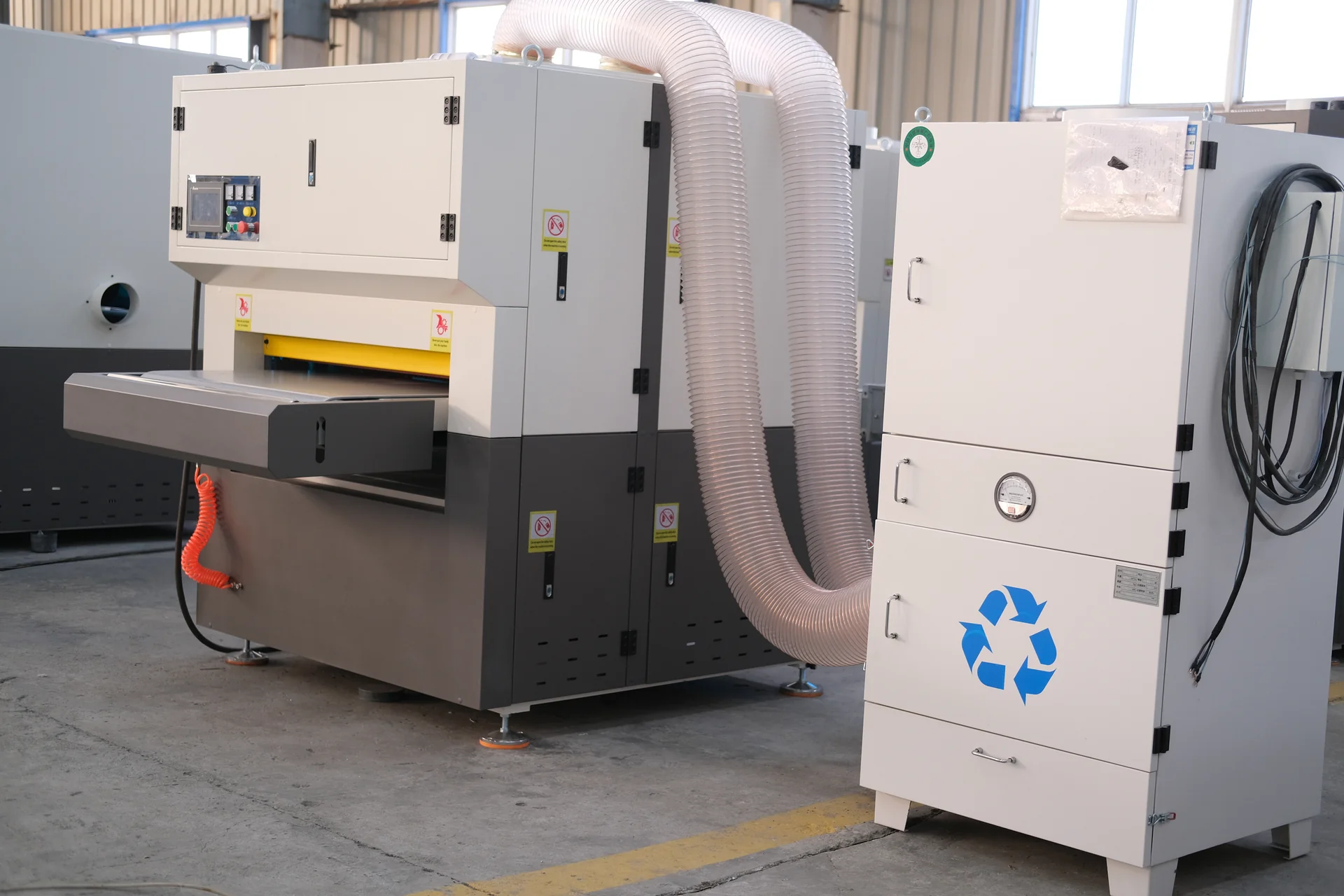
A good result on a large solid coupon does not prove the machine will handle a small perforated part. Test what you actually produce.
Explore CHENDA Deburring and Finishing Machines, or see how deburring fits into a complete sheet metal fabrication workflow with sheet metal laser cutting and press brake bending. For laser power choices that affect edge quality, read 3kW vs 6kW Fiber Laser Cutting Machine.
10. Frequently Asked Questions
Do laser-cut parts need deburring?
Usually yes, though less than plasma or flame-cut parts. Laser cutting leaves small burrs and sharp edges, and oxygen cutting adds an oxide layer. Parts that will be coated, handled or assembled normally need deburring and some edge rounding.
What is the difference between deburring and edge rounding?
Deburring removes the raised projection left by cutting. Edge rounding changes the sharp corner into a radius. A part can be free of burr and still have a sharp edge.
What edge radius is needed for painting or powder coating?
A sharp 90° edge cannot be coated properly. UK structural steel guidance considers about 2 mm generally sufficient, about 1 mm adequate with modern high-build coatings, and some specifications require 3 mm. A uniform radius is better than an asymmetric one.
Can a deburring machine remove heavy plasma or flame-cut slag?
Yes, if it has a suitable slag-removal stage in front of the finishing heads. A machine configured only for light burr and finishing will be overloaded by heavy slag. Hard high-speed plasma dross is best fixed at the cutting table.
Do I need to remove the oxide from oxygen-cut laser parts before powder coating?
Usually. The coating bonds to the oxide, but the oxide is not permanently bonded to the steel, so the coating can flake off if damaged. Agree the required removal level with your coater; many OEMs require complete removal.
Can stainless steel and aluminum be deburred on the same machine as carbon steel?
Only with a contamination-control plan. Use separate abrasives and cleaning for stainless steel, and dedicated or thoroughly cleaned dust collection for aluminum, because mixed aluminum and steel dust is a fire and explosion risk.
Wet or dry deburring: which is better?
Dry deburring with extraction suits single-material carbon steel work and avoids sludge. Wet deburring reduces dust and heat and suits mixed metals and aluminum, but needs fluid maintenance and sludge disposal.
Sources
- Steel Construction Institute (SCI) — Guidance Note 8.01: Preparation of steel surfaces for painting
- The Fabricator — Finishing off oxide layer problems
- The Fabricator — How metal fabricators can achieve plasma-cut edge perfection
- The Aluminum Association — Safe handling of aluminum fine particles
- SendCutSend — Wet or dry processes for sheet metal deburring
Figures are taken from the published sources above and are general references, not CHENDA machine test results.
Request a Deburring Recommendation from CHENDA
Send us:
- Cutting method (laser with oxygen or nitrogen, plasma, flame or punching)
- Material grades and thickness range
- Close-up photos of the incoming edges, plus your largest and smallest part drawings
- The required outgoing condition: burr height, edge radius, oxide removal and face finish
- Daily volume and whether both faces must be processed
We will propose a station sequence, a retention method and a trial plan for your parts.
Get a Deburring and Finishing Quote · Email info@chendalaser.com · Phone +86 153 0644 7102