
Jump to a section
- 1. Cutting Thickness: 3kW vs 6kW
- 2. Cutting Speed: Where 6kW Actually Saves Time
- 3. Cutting Speed Is Not the Whole Job Time
- 4. Price: How Much More Does 6kW Cost?
- 5. Does 6kW Pay Back? Two Worked Examples
- 6. Assist Gas: Oxygen, Nitrogen or Air
- 7. Quick Decision Guide
- 8. CHENDA Fiber Laser Cutting Machines
- 9. Test Your Own Parts Before You Decide
- 10. Frequently Asked Questions
- Request a 3kW vs 6kW Recommendation from CHENDA
Quick answer:
- Thickness: A 6kW fiber laser cuts up to about 25 mm carbon steel, 20 mm stainless and 16 mm aluminium. A 3kW machine reaches about 22 mm, 10 mm and 8 mm.
- Speed: The biggest speed gain is on stainless steel cut with nitrogen: about 2–3 times faster at 3–10 mm. Aluminium gains about 1.6–2.7× at 3–8 mm.
- Where it barely matters: On carbon steel cut with oxygen up to 6 mm, 6kW is only about 10–30% faster.
- Price: The upgrade typically adds about US$20,000–40,000 to the machine price.
| 3kW | 6kW | |
|---|---|---|
| Max carbon steel (O₂) | 22 mm | 25 mm |
| Max stainless steel (N₂) | 10 mm | 20 mm |
| Max aluminium (N₂) | 8 mm | 16 mm |
| Stable production range, carbon steel | about 8–12 mm | about 15–20 mm |
| Stable production range, stainless steel | about 6–8 mm | about 10–15 mm |
| Typical machine price (est.) | US$35,000–60,000 | US$60,000–100,000 |
Scroll horizontally to view all columns on smaller screens
Cutting thickness, speed and price values below are comparative external reference examples, not CHENDA machine test results or quotations. Confirm the proposed configuration and process conditions before ordering.
Not sure which power your parts need? Send CHENDA your main materials, thickness range and one drawing. We will recommend 3kW or 6kW and quote the matching fiber laser cutting machine configuration. Request a Power Recommendation · Email info@chendalaser.com · Phone +86 153 0644 7102
1. Cutting Thickness: 3kW vs 6kW
| Material (assist gas) | 3kW maximum | 6kW maximum | 3kW stable production | 6kW stable production |
|---|---|---|---|---|
| Carbon steel (O₂) | 22 mm | 25 mm | 8–12 mm | 15–20 mm |
| Stainless steel (N₂) | 10 mm | 20 mm | 6–8 mm | 10–15 mm |
| Aluminium (N₂) | 8 mm | 16 mm | 4–6 mm | 8–10 mm |
Scroll horizontally to view all columns on smaller screens
Maximum severance and stable production thickness are different operating limits. Confirm both for the intended machine and material.
Other published charts agree closely:
- Alternative published range: 3kW reaches 16–22 mm carbon steel, 8–12 mm stainless and 6–10 mm aluminium.
- Alternative published range: about 22 mm steel and 12 mm stainless at 3kW, and about 25 mm steel and 20–25 mm stainless at 6kW.
Maximum is not production. A machine running at its maximum thickness has no margin for plate variation, lens contamination or focus drift. Choose the power whose stable range covers your regular jobs.
2. Cutting Speed: Where 6kW Actually Saves Time
Published starting speeds (m/min) from a third-party model-specific parameter table:
Carbon steel, oxygen
| Thickness | 3kW | 6kW | 6kW speed gain |
|---|---|---|---|
| 3 mm | 3.2–3.6 | 3.5–4.2 | about 1.1× |
| 6 mm | 2.2–2.5 | 2.7–3.2 | about 1.3× |
| 10 mm | 1.0–1.3 | 2.0–2.3 | about 1.9× |
| 12 mm | 0.9–1.0 | 1.9–2.1 | about 2.1× |
| 16 mm | 0.6–0.7 | 1.2–1.4 | about 2.0× |
| 20 mm | 0.5–0.55 | 0.6–0.7 | about 1.2× |
Scroll horizontally to view all columns on smaller screens
Stainless steel, nitrogen
| Thickness | 3kW | 6kW | 6kW speed gain |
|---|---|---|---|
| 1 mm | 28–35 | 40–50 | about 1.4× |
| 2 mm | 18–24 | 25–30 | about 1.3× |
| 3 mm | 7–10 | 15–18 | about 1.9× |
| 4 mm | 5–6.5 | 10–12 | about 1.9× |
| 6 mm | 2.0–2.7 | 6–7 | about 2.8× |
| 8 mm | 1.0–1.2 | 3.5–3.8 | about 3.3× |
| 10 mm | 0.5–0.6 | 1.6–2.0 | about 3.3× |
Scroll horizontally to view all columns on smaller screens
Aluminium, nitrogen
| Thickness | 3kW | 6kW | 6kW speed gain |
|---|---|---|---|
| 2 mm | 15–18 | 20–25 | about 1.4× |
| 3 mm | 7–8 | 14–16 | about 2.0× |
| 6 mm | 1.5–2 | 3.5–4 | about 2.1× |
| 8 mm | 0.6–0.7 | 1.5–2 | about 2.7× |
Scroll horizontally to view all columns on smaller screens
Speed gain is calculated from the mid-range values in the comparison table. These cutting-speed figures are not complete production-cycle measurements.
What the tables show:
- Thin carbon steel with oxygen gains little. The oxygen reaction supplies much of the cutting energy, so extra laser power adds only 10–30% speed up to 6 mm.
- Nitrogen cutting gains the most. Nitrogen adds no reaction heat, so laser power sets the speed. At 6–10 mm stainless, 6kW is about 3 times faster.
- Thin sheet below 2 mm gains about 30–40%. Here the machine’s acceleration and piercing often limit output more than laser power.
3. Cutting Speed Is Not the Whole Job Time
A batch includes loading, piercing, cutting, unloading and sorting. Example batch:
| Activity | 3kW | 6kW (30% faster cutting) |
|---|---|---|
| Setup and loading | 15 min | 15 min |
| Cutting and piercing | 20 min | 14 min |
| Unloading and sorting | 25 min | 25 min |
| Total | 60 min | 54 min |
Scroll horizontally to view all columns on smaller screens
A 30% faster cut saves only 10% of the batch time here. An exchange table or better unloading may help more than extra laser power.
4. Price: How Much More Does 6kW Cost?
| Source | 3kW | 6kW | Difference |
|---|---|---|---|
| Published supplier price estimates | US$35,000–60,000 | US$60,000–100,000 | US$25,000–40,000 |
| Published UK machine example (ex VAT) | £42,000 | £58,000 | £16,000 |
| Published US-built machine example | US$134,900 | US$159,900 | US$25,000 |
Scroll horizontally to view all columns on smaller screens
Prices are public asking-price examples, not CHENDA quotations. They vary with the laser source, cutting head, table size, options and commercial terms.
Running cost also changes:
- Electricity: total machine demand rises, but not double, because the chiller, drives and extraction do not double.
- Nitrogen: per accepted part it may fall, because cutting time is shorter.
Always compare cost per accepted part.
Get a 3kW and 6kW quote side by side. CHENDA can price both laser options on the same machine frame, so you see the real difference for your table size. Compare 3kW and 6kW Prices · info@chendalaser.com
5. Does 6kW Pay Back? Two Worked Examples
Assumptions:
- Incremental price for 6kW: US$25,000
- 2 hours of cutting per day on the job type shown
- Machine-hour value: US$60
- 250 working days a year
- The time saved is used for paid work
| 6 mm stainless steel, N₂ | 6 mm carbon steel, O₂ | |
|---|---|---|
| Speed gain (mid-range) | 2.77× | 1.26× |
| Daily cutting time on 6kW | 0.72 h | 1.59 h |
| Machine time saved per day | 1.28 h | 0.41 h |
| Value per year | US$19,154 | US$6,102 |
| Simple payback | about 1.3 years | about 4.1 years |
Scroll horizontally to view all columns on smaller screens
The lesson: 6kW pays back fast in shops cutting medium-thickness stainless or aluminium with nitrogen. It pays back slowly in shops cutting mostly thin carbon steel with oxygen.
If the saved hours cannot be sold, the payback is zero. That is why the decision should start with your order book.
6. Assist Gas: Oxygen, Nitrogen or Air
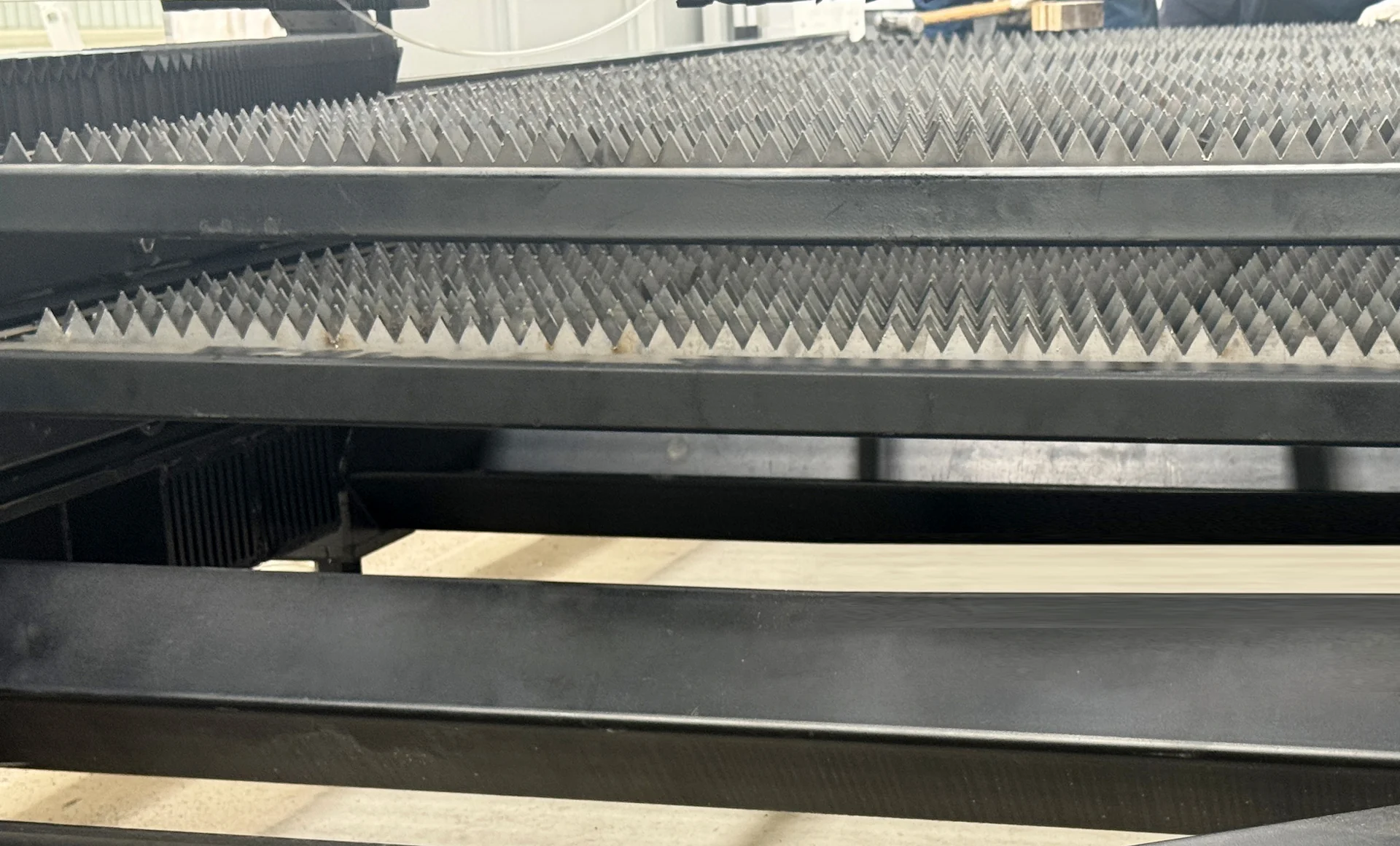
| Gas | Typical pressure | Used for | Edge |
|---|---|---|---|
| Oxygen | 0.5–0.7 bar (1.0–1.5 bar for 25 mm+) | Carbon steel | Oxidized; fine for painting after cleaning |
| Nitrogen | 10–12 bar thin, 16–20 bar thick | Stainless steel, aluminium | Bright, oxide-free |
| Compressed air | Depends on compressor | Thin carbon steel, stainless where oxide is acceptable | Slight oxidation |
Scroll horizontally to view all columns on smaller screens
The listed gas pressures are indicative process references. Confirm the required pressure and flow for the exact cutting equipment and material.
6kW machines spend more time on high-pressure nitrogen. Check that your nitrogen supply or generator can deliver the flow at 16–20 bar before you buy.
7. Quick Decision Guide
| Your regular work | Recommended power |
|---|---|
| Mostly 1–3 mm sheet, carbon steel ≤ 6 mm, stainless ≤ 3 mm | 3kW |
| Regular 8–12 mm carbon steel | 3kW is workable; 6kW is about 2× faster at 10–12 mm |
| Regular 6–10 mm stainless or aluminium with nitrogen | 6kW (about 3× faster) |
| Stainless 12–20 mm or aluminium 10–16 mm | 6kW (beyond 3kW’s maximum) |
| Cutting is not your bottleneck | 3kW plus an exchange table or better unloading |
| Occasional 20 mm+ plate | 3kW and outsource, unless thick work is regular |
Scroll horizontally to view all columns on smaller screens
8. CHENDA Fiber Laser Cutting Machines
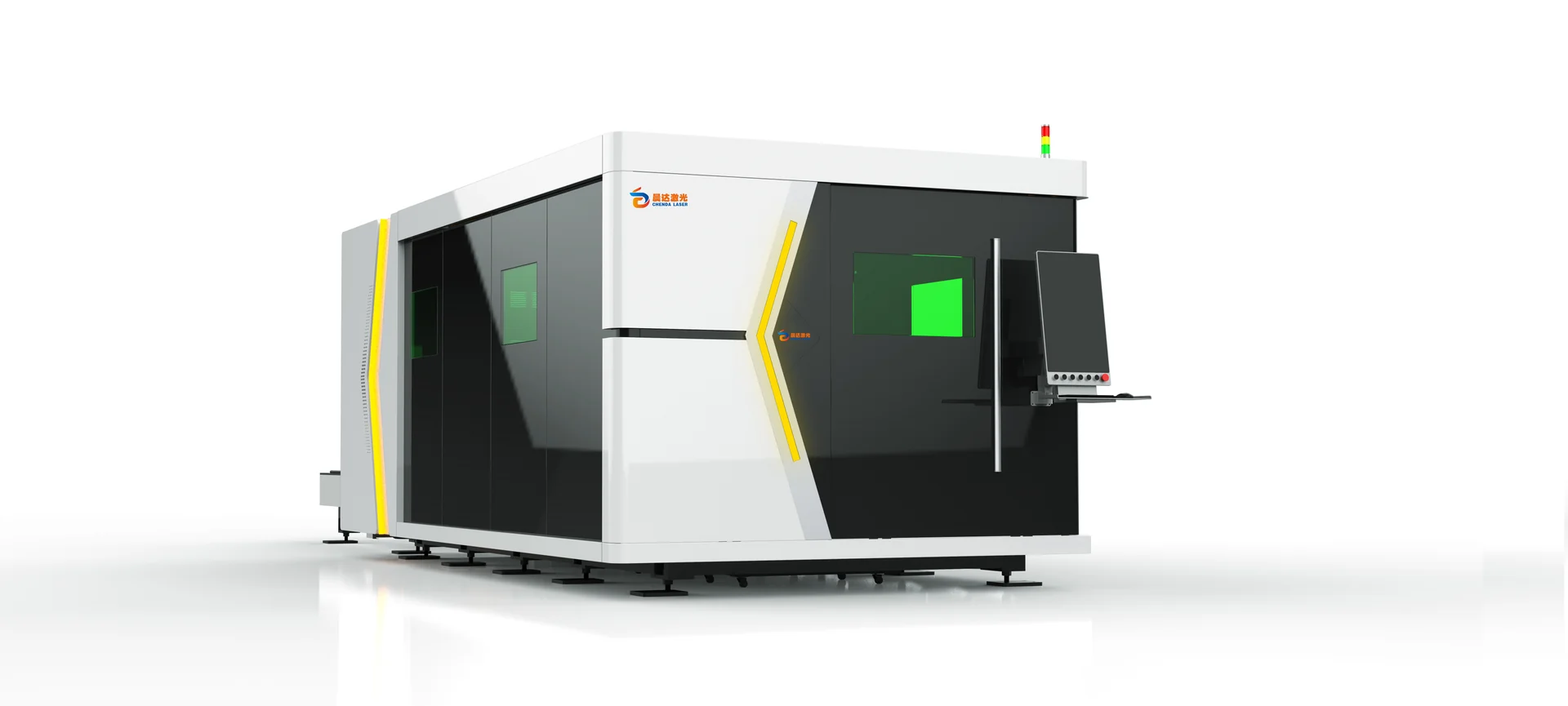
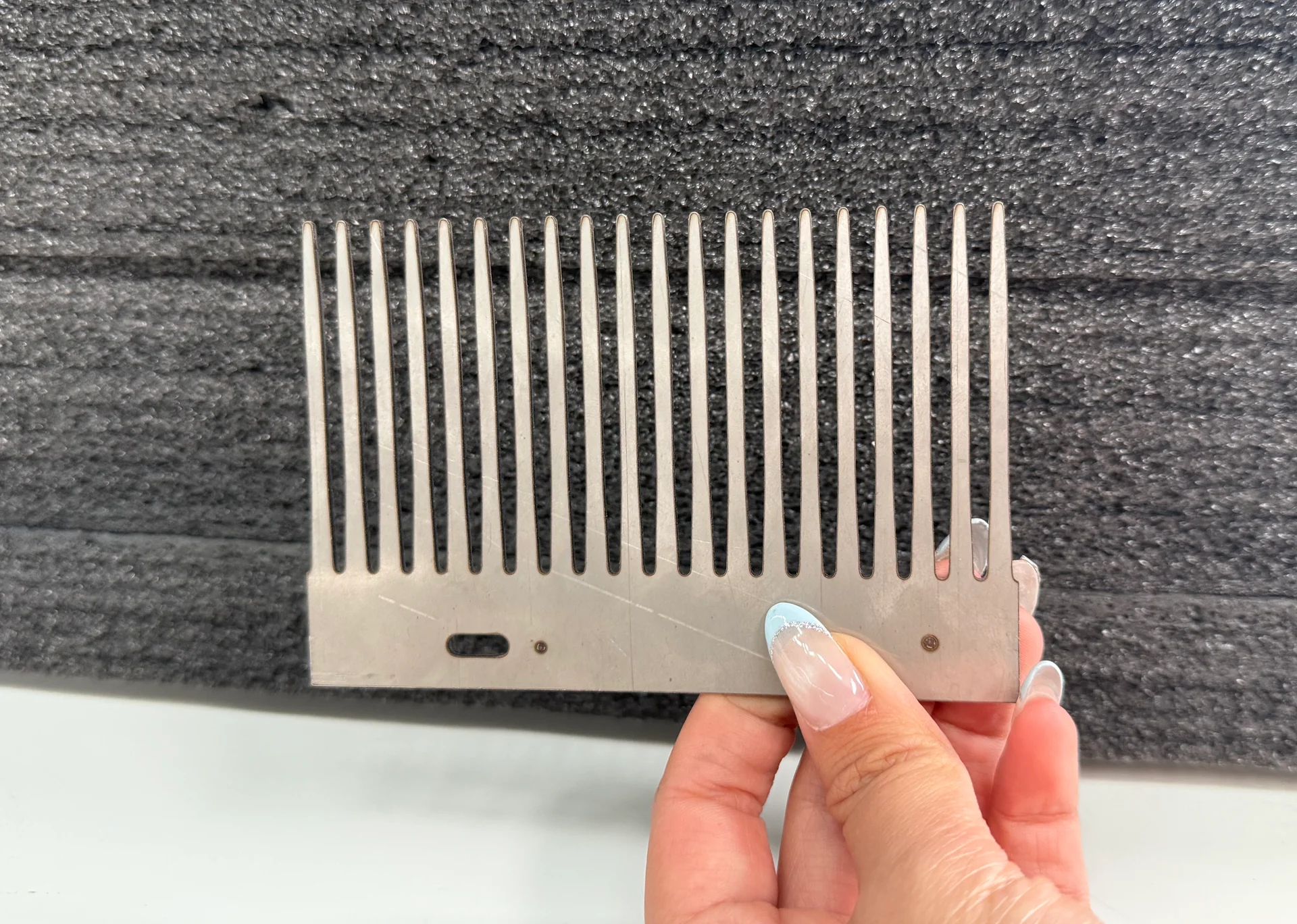
CHENDA’s enclosed exchange-table G-series is offered from 1.5kW to 6kW:
| Model | Working area | Laser power options |
|---|---|---|
| CHD-G1530 | 1,500 × 3,000 mm | 1.5–6 kW |
| CHD-G2040 | 2,000 × 4,000 mm | 1.5–6 kW |
| CHD-G2060 | 2,000 × 6,000 mm | 1.5–6 kW |
| CHD-G2560 | 2,500 × 6,000 mm | 1.5–6 kW |
Scroll horizontally to view all columns on smaller screens
All four use a welded bed, an aluminium-profile crossbeam and exchange tables. They cut carbon steel, stainless steel and aluminium alloy; galvanized sheet, silicon steel and copper alloys get a process review.
Because the same frame takes 3kW or 6kW, you can compare both on identical table size and handling.
Explore CHENDA Sheet Metal Laser Cutting Machines or request the datasheet from Catalogs & Downloads.
9. Test Your Own Parts Before You Decide
- Pick one regular part and one difficult part (small holes, tight corners, thick plate).
- Cut both on 3kW and 6kW with the same material, gas and quality criteria.
- Record cutting time, total batch time, gas use and accepted parts.
- Compare cost per accepted part and whether you can sell the extra capacity.
10. Frequently Asked Questions
How thick can a 3kW fiber laser cut?
Up to about 22 mm carbon steel with oxygen, 10 mm stainless steel and 8 mm aluminium with nitrogen. Stable production thickness is lower: about 8–12 mm carbon steel and 6–8 mm stainless.
How thick can a 6kW fiber laser cut?
Up to about 25 mm carbon steel, 20 mm stainless steel and 16 mm aluminium. Stable production is about 15–20 mm carbon steel and 10–15 mm stainless.
Is a 6kW laser twice as fast as a 3kW?
Only for some jobs. On 6–10 mm stainless with nitrogen it is about 3 times faster. On 3–6 mm carbon steel with oxygen it is only about 10–30% faster.
How much more does a 6kW fiber laser cost?
Typically about US$20,000–40,000 more than a comparable 3kW machine. Published examples include £42,000 vs £58,000 (published UK model example) and US$134,900 vs US$159,900 (published US-built model example).
Is 3kW enough for a small fabrication shop?
Usually yes, if most work is 1–3 mm sheet, carbon steel up to about 6 mm and stainless up to about 3 mm.
When does 6kW pay back fastest?
When you regularly cut medium-thickness stainless or aluminium with nitrogen and can sell the extra capacity. In the example above, payback is about 1.3 years.
Can a 3kW machine be upgraded to 6kW later?
Only if the cutting head, optics, chiller, electrical supply and safety system are rated for 6kW. Ask before you buy if you plan to upgrade.
Request a 3kW vs 6kW Recommendation from CHENDA
Send us:
- Main materials and usual thickness range
- Sheet size and one representative drawing
- Monthly production volume
- Country of installation and required edge finish
We will recommend the power, table size and gas set-up, and quote 3kW and 6kW side by side.
Request a Technical Equipment Quote · Email info@chendalaser.com · Phone +86 153 0644 7102